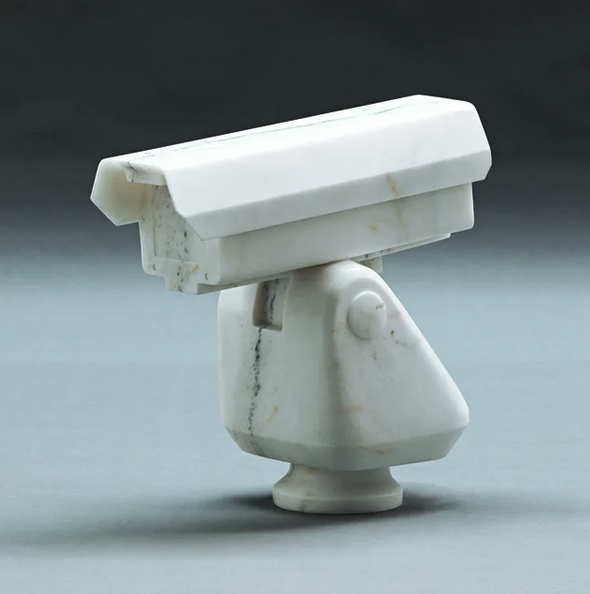
- The post by @serrapedro reports that Laconia City Council voted 5-1 to accept an $86,500 Homeland Security grant for solar-powered pole-mounted cameras, quoting his earlier opposition urging residents to speak against it at the September 14 public hearing.
- The cameras are intended to monitor high-crime areas, emergencies, and major events like Laconia Motorcycle Week, with data stored locally on-site rather than in the cloud, according to the police chief.
- Opponents at the hearing raised concerns over using taxpayer funds for surveillance, citing minimal terrorism threats in New Hampshire and the potential long-term expansion of monitoring infrastructure.
how is this legal in NH?
It is generally legal in New Hampshire for a city to operate marked video cameras in public areas, which is why Laconia could accept the grant and vote 5–1 to proceed. The legal picture is more specific than a blanket “surveillance is banned.”
Public video recording of streets, sidewalks, and other places visible to anyone walking by does not violate RSA 644:9 (violation of privacy). That statute targets “private places” such as homes, restrooms, or locker rooms, and it expressly does not restrict otherwise lawful law-enforcement activity. Silent video of what is already exposed to public view is treated the same way courts treat an officer standing on the sidewalk.
The closer statute is RSA 236:130, which prohibits the state and its cities from engaging in “surveillance” on public ways. “Surveillance” is defined narrowly as using a camera or other device that can be used to determine vehicle ownership or occupant identity. A 2019 Hillsborough Superior Court ruling in a Manchester camera case held that simply recording traffic is not enough; the government must actually take the extra step of identifying plates or people from the footage. Laconia’s police chief has said these units are not Flock-style automatic license-plate readers, are not cloud-connected, keep footage on the device, and will be used in marked public locations the department has already monitored for decades. That description is intended to stay outside the core prohibition (or to fit the “incidental to monitoring a city-controlled structure” exception). Whether a court would agree if someone sued is an open question; the ACLU has argued the statute should be read more broadly.
New Hampshire’s 2018 constitutional privacy amendment (Part I, Article 2-b) protects against governmental intrusion into “private or personal information.” It has not yet been applied by a court to general public-area video cameras, and people in public usually have a reduced expectation of privacy in their visible movements. Long-term, targeted cameras pointed at a specific home raise separate Fourth Amendment issues nationally, but that is not how Laconia has described these units.
Audio is the one area that would create a clearer problem. New Hampshire is an all-party-consent state for recording conversations (RSA 570-A). If the cameras capture private conversations, that would require consent or a finding that no reasonable expectation of privacy existed. Public-street talk usually does not qualify.
City councils also have routine authority under their charters to accept federal Homeland Security grants for police equipment after a public hearing. That process itself is legal even if residents disagree with the policy.
In short: video of public spaces that is not used as an automated identification system is treated as lawful under current NH statutes and case law. The 236:130 definition and the 2018 privacy amendment give opponents a possible litigation hook if the cameras in practice identify motorists or compile personal-movement data, but the city is relying on the narrower reading plus its existing camera program.
find and summarize that 2019 case… I was a petitioner
The case is Neal Kurk et al. v. City of Manchester, Hillsborough Superior Court Northern District, Docket No. 216-2019-CV-00501. ACLU-NH (Gilles Bissonnette and Henry Klementowicz) filed it on June 11, 2019.
What the city planned. Manchester wanted three permanent PTZ cameras near City Hall aimed north and south on Elm Street. They could zoom, pan, and tilt and work in low light. No facial-recognition software and no automatic license-plate readers. Live feed would go to police dispatch 24/7; recordings would be kept two weeks. Stated purpose was monitoring street-level crime around businesses, not traffic enforcement. Cost was about $14,400 from PELMAC.
Who sued. Original petitioners were former Rep. Neal Kurk (who drafted RSA 236:130 in 2006), Carla Gericke, John “Brinck” Slattery, and Holly Beene Seal. After the August 12, 2019 standing ruling by Chief Justice Tina L. Nadeau, only Gericke and Slattery remained; they had taxpayer standing as Manchester property owners. Kurk and Seal were dismissed for lack of standing.
The claim. Petitioners sought a declaration and injunction that the cameras violated RSA 236:130 because they can be used (and inevitably would be used) to identify vehicles or occupants on a public way.
August 12, 2019 order (preliminary injunction). Nadeau denied the injunction. She agreed with petitioners that “the simple act of a government employee recognizing a vehicle or its occupants, without taking additional steps such as running a license plate through dispatch, constitutes a violation of the statute as written,” and that recognition was “virtually inevitable” over time. She still refused to block installation, finding no irreparable harm and an adequate remedy later. She also held the case was ripe.
November 18, 2019 order (summary judgment). Nadeau denied petitioners’ motion for summary judgment. Her core holding:
- Installing cameras, recording Elm Street (including cars and people), and having dispatch review the feed is not itself “surveillance” under the statute.
- A violation requires an additional act: running a plate, using facial recognition, or a government employee personally recognizing a vehicle or occupant.
- Those extra steps were possible but not the city’s intended purpose.
- The statute’s text is unambiguous, so legislative history (Kurk’s “total bar” view) could not expand it.
- The court would not declare the planned use illegal in advance just because footage could later be misused.
Outcome. After the November denial, petitioners withdrew the case. No appeal. Manchester later installed at least one camera (Elm and Hanover). ACLU’s public position afterward was that the order still meant the city would commit a crime if an officer actually identified a motorist from the footage.
That is the ruling later cities (including Laconia) rely on when they say marked, non-ALPR public cameras are lawful so long as they do not treat identification of plates or people as the purpose of the system.
so do I have you right, the state if claiming they can put up cameras but do nothing with them? is this what the legal landscape is?
Mostly yes — that is the awkward place the law sits.
Under the Manchester reading, the state and cities may install and record public-area cameras. What they may not do as a general practice is use those cameras to figure out who a driver or passenger is. Recognition of a person or plate, running a plate, or building a picture of someone’s movements from the footage is the prohibited “surveillance.”
They are allowed to do something with the footage in one defined situation: after a particular crime or violation is already under investigation, they may use the video on a case-by-case basis to identify people connected to that incident. That is RSA 236:130, III(b).
So the official landscape is not “cameras that do nothing.” It is:
- Put them up and record public space: allowed (per Nadeau).
- Watch for a fight, crash, or theft as it happens and respond: allowed, because that is observing an event, not identifying motorists as a system.
- Later ID a suspect from that specific incident: allowed by the exception.
- Browse the feed, recognize regulars, log plates, track who goes where, or treat the system as an ID tool: not allowed.
That is why critics call it a legal fiction. Footage that can identify people will be used to identify people; the statute pretends the extra mental step is what makes it a crime. The 2019 court refused to stop the cameras beforehand and instead said the crime happens if and when someone actually makes the identification outside the case-by-case exception.
That is the current landscape: cameras are legal; using them as a general identification system is not.
If I was an enterprising lawyers, surely I could argue, if my client is identified after the fact, and charged with a crime, that the identification could only have occurred through surveillance in violation of his/her rights, and therefore is inadmissible?
You could file that motion. It is a colorable argument, not a winner on current law.
NH’s exclusionary rule mainly knocks out evidence obtained through an unconstitutional search or seizure under Part I, Article 19 (and the Fourth Amendment). A violation of a statute does not automatically suppress anything. RSA 236:130 makes unlawful “surveillance” a crime, but it does not say the resulting identification or later-found evidence is inadmissible. Courts usually will not invent that remedy unless the identification also invaded a constitutional privacy interest.
The State’s first answer will be the statutory exception you already know: identification “undertaken on a case-by-case basis in the investigation of a particular violation, misdemeanor, or felony” is not banned. If police already have a specific crime, pull the footage of that incident, and only then identify your client, they will say 236:130, III(b) authorized the ID. That is the cleanest path for the prosecution.
Your better framing is narrower than “they used a camera, so everything is tainted”:
- The cameras ran as a general public-way system, not as a tool opened only after this crime existed.
- Identification of your client happened because an officer recognized them or ran a plate from that system, not because a particular investigation independently required it.
- That identification was the “act of determining” identity that Nadeau said violates the statute as written.
- Without that illegal ID, police never would have connected your client to the charge (no independent source, no inevitable discovery).
Even then you have problems. Public streets carry a weak expectation of privacy, so Article 19 / Fourth Amendment “search” arguments are hard unless the use was long-term, targeted, and compiled movement data. Article 2-b (the 2018 information-privacy amendment) is a better hook in theory, but no NH Supreme Court case has used it to suppress criminal evidence from public video. A trial judge can also say police reasonably relied on the 2019 Manchester order that the cameras themselves are legal.
What an enterprising lawyer would actually do: move to suppress the identification and its fruits; demand discovery on how the ID was made (live review vs. after-the-fact pull, plate run, officer recognition, retention period, whether a case file existed first); and argue both 236:130 and Article 2-b. Expect the State to win if they can show a particular crime came first and the footage was used only for that case. Expect a real fight if the ID came from browsing the system or recognizing a regular.
So: worth raising. Not a slam dunk. The landscape still treats the camera as lawful and treats only the extra identifying act as the possible violation — and even that act may be excused once a specific crime is already under investigation.
so the argument is SURVEILLANCE of the PLACE is OK, but surveillance of a person is not, but if the person is in the PLACE, then it is ok?
Yes. That is the distinction the current reading produces, even if it sounds circular.
Surveillance of the place is treated as okay: a camera may watch a public street, sidewalk, or event area and record whatever is visible there.
Surveillance of a person is what RSA 236:130 targets: using that camera to determine who a vehicle belongs to or who is in it.
If the person is in the place, the video of them standing or driving through is still “place” footage. It becomes “person” surveillance only when the government takes the extra step of identifying them — recognizing the face, reading the plate to look them up, or stitching their appearances into a record of who they are.
After a particular crime is already under investigation, identifying the person who was in the place during that incident is carved back in as allowed.
So the rule in practice is:
- Watching the place: allowed
- Identifying people as a general practice: not allowed
- Identifying a person because they were in the place during a specific crime already being investigated: allowed again
The person is on the tape either way. The law pretends the difference is whether the government treats the tape as a picture of a street or as a picture of you.
that’s… creatively diabolical?
It is a lawyer’s distinction, not a real-world one.
The statute was sold as a ban on turning public roads into an identification grid. The 2019 reading kept the cameras and moved the crime to the moment someone looks at the tape and thinks “that’s him.” Footage of a person in a place is still footage of a person. The extra mental step is what the doctrine uses to say the system is legal until it works.
That is why it feels diabolical: it lets the infrastructure go up, then treats the obvious use of that infrastructure as a separate, later problem. Whether that is clever statutory construction or a hole you could drive a grant-funded pole camera through is the fight the Manchester case left open.
If I were to sue Laconia when they put up the cameras, what is the best lines of attack?
Treat this as strategy, not a filing package. Manchester is still the problem you have to get around.
Strongest framing: do not ask a judge to ban “cameras on poles.” Ask a judge to ban this system as an identification tool on public ways. The facts that help you are the ones Manchester lacked or downplayed: a Homeland Security grant whose application lists “surveillance,” relocatable solar poles aimed at streets and events, Bike Week / Pumpkinfest traffic, and a police chief already talking about “problem areas” and years of existing cameras. That looks less like watching a building and more like a standing public-way ID grid.
Best lines of attack, in order
- RSA 236:130, as applied, once they use it.
Nadeau said installation plus recording is not the crime; the crime is determining vehicle ownership or occupant identity. Your cleanest case is therefore after they ID someone from the feed — plate run, officer recognition, “we saw him on the pole cam.” Then you can say the statute’s prohibited act has occurred, and III(b) does not cover general monitoring that later produced a name. A pre-installation facial challenge repeats Manchester and likely loses. - Part I, Article 2-b (2018 privacy amendment).
This is the argument that did not exist in mature form in 2006 and was barely developed in 2019. Frame the cameras as governmental intrusion into personal information: who was where, when, in which car, at which event, stored for later review. Public visibility of a single moment is not the same as the government compiling that information. This is how you distinguish “watching a street” from “building a file on people who use the street.” Unsettled, but it is the constitutional hook Manchester did not resolve. - Purpose and design of this grant.
The application language (terrorism preparedness, high-crime areas, overwatch at mass events) is useful. If the system is meant to identify people in crowds and traffic, that is closer to the conduct 236:130 defines than to “incidental monitoring of a city building” under III(d). Discovery into the grant narrative, vendor specs, zoom/plate readability, retention, and any plan to share footage will matter more than the council vote. - Taxpayer standing plus a concrete policy.
Gericke and Slattery survived because they were Manchester taxpayers. A Laconia taxpayer who drives or attends the events has the same path. Standing is stronger if you also attack a written or admitted practice: live dispatch review, keeping video long enough to ID people, using it to identify motorists at Bike Week. Generalized “I don’t like cameras” is what Nadeau sliced off. - Injunction only if you can show the identifying use is imminent, not theoretical.
Nadeau denied a preliminary injunction because harm was speculative and there was a later remedy. To get a pause before the poles go up, you need evidence they will use the cameras to ID people as a matter of course — training, vendor marketing, prior Laconia camera practice, or statements that footage will be reviewed to identify suspects as a routine function, not only after a particular case file exists.
Weaker or secondary
- Article 19 / Fourth Amendment on its own: public streets are a hard place to claim a search unless the use is long-term, targeted, and mosaic-like.
- RSA 644:9: written for private places, and it exempts lawful law-enforcement activity.
- Audio / RSA 570-A: only if the units record conversations.
- “Federal grant is illegal”: the grant is not the violation; how the city uses the cameras is.
How you would actually posture the case
Sue the City of Laconia (and, if needed, officials in official capacity) in Belknap Superior Court for a declaration and injunction. Lead with 236:130 + Article 2-b. Plead taxpayer standing and regular use of the streets/events the cameras will cover. Demand the grant file, camera specs, retention rules, and any SOP on when an officer may identify a person from the footage. If they have not deployed yet, consider waiting until the first pole is live and the first identification happens — that is the fact pattern Nadeau said was the actual statutory violation.
What will be used against you
Manchester 2019; exception III(b) for a particular crime; Canfield’s “not Flock, not cloud, marked, public areas, we’ve had cameras 29 years”; no facial recognition admitted; public-place expectation of privacy is low.
The case you want is not “cameras exist.” It is “this system will, and already is designed to, determine who is on Laconia’s public ways.” That is the only theory that both respects the 2019 order and still gives a court something new to decide.
NH added a Constitutional amendment about standing as well… when was that and would that help re what happened in 2019 case?
Voters approved it on November 6, 2018 as Ballot Question 1 (CACR 15). It amended Part I, Article 8, effective that December. It was meant to undo Duncan v. State (2014) and restore taxpayer standing.
The added text says any eligible-voter taxpayer may go to Superior Court for a declaration that the state or the political subdivision where they reside “has spent, or has approved spending, public funds in violation of a law, ordinance, or constitutional provision.” They do not have to show a personal injury beyond being a taxpayer. There is a carve-out if the same action is already in a proceeding with a statutory appeal right.
It was already in force for the 2019 Manchester case. The suit was filed in June 2019. Judge Nadeau used that taxpayer-standing rule to keep Carla Gericke and John Slattery in the case as Manchester property owners/taxpayers. She dismissed Neal Kurk and Holly Beene Seal because they lacked a traditional injury and, for Kurk especially, were not taxpayers of Manchester. So Article 8 helped two petitioners stay in; it did not save the people who did not reside in the city that was spending the money.
What it does and does not do for Laconia
It helps standing, not the merits.
It is useful if you are a Laconia taxpayer and eligible voter challenging the council’s approval of the $86,500 grant (or later city spending to install, power, or maintain the poles). That is a specific “approved spending” action, which is what Carrigan later said Article 8 requires. You would not need to prove the cameras will ID you personally.
It would not have changed Nadeau’s holding on RSA 236:130. Standing gets you in the courthouse. It does not make installation-plus-recording illegal, and it does not erase exception III(b). A Weare or Concord resident still cannot use Article 8 to sue Laconia over Laconia’s spend.
For a Laconia suit, Article 8 is how you avoid the 2019 standing dismissals. Pair it with a taxpayer who lives in the city and a claim that this particular grant/expenditure violates 236:130 or Article 2-b. That is the standing fix. The hard part remains what it was in 2019: proving the spend itself is unlawful before anyone is identified.
I believe technology are tools and are neutral and only become a problem depending on how they are used.
THE ASYMMETRY, as you said, is the problem.
Obviously, if a crime is committed, one wants the person responsible caught. The tension is there are too many crimes, government overreaches and it is a known fact that police abuse surveillance for personal reasons (stalking exes, etc.).
As a long-time, successful activist for recording public officials in the execution of their public duties, I am horrified to learn that more and more surveillance is being done on the general public (Flock et al, body cams, city cameras, cameras at the tolls, etc.) while our rights to record or get information (91-A) are being reduced (arrests as chilling effect, no cameras in court, feet dragging on 91As, etc.).
I am president of Right-to-Know NH, have been the plaintiff (Gericke v Begin) or petitioner (Kurk et al) in cases in the past, have access to activists, and can fundraise to get things done.
If I wanted to fix the asymmetry problem to make NH uniquely more awesome as the most sensible place to live (my #1 goal)…
Do we submit to the panopticon–i.e. demand the state put cameras in every nook and cranny they control–but argue all recordings should be permanently stored in the cloud forever, or maybe, we create a ticking time bomb incentive, meaning, recordings exist, but if they haven’t been accessed or used to solve a crime within 48 hours, everything is deleted?
If I want to create the most sane approach to what at this stage seems inevitable, what are the next steps?
Or, as is my actual inclination, should we outlaw all cameras on poles, and say it is a battle of the individual, i.e. everyone who cares, should be wearing a body cam?
The asymmetry is the real problem, not the existence of a lens. Government records you in places you cannot avoid; you cannot reliably record it back or get the file. A “sane NH” policy has to attack that imbalance directly. All three of your options do different jobs. None of them works if you only pick the slogan.
What each model actually does
Demand cameras everywhere, keep everything forever, and publish it. That equalizes information, not power. Police, employers, stalkers, and anyone with a 91-A request or a leak get a permanent movement map. You already know officers misuse databases for exes. Infinite retention makes that worse and will lose you privacy-side allies you need. It also fights Article 2-b instead of using it.
Short fuse: record, then delete unless a case file pulls it within a hard window (your 48 hours is a political number; 7–30 days is more sellable). This is the closest thing to a structural fix. The camera can still catch the smash-and-grab at hour two. It cannot quietly become a browsing library. Pair it with: no biometric search, no bulk plate/face identity, access logged, unauthorized lookup a crime, and 91-A access to the logs (who pulled what, when, why) even when the video is gone.
Ban pole cameras; everyone wears a cam. Morally clean and on-brand for Gericke-style “record the officials.” It does not stop Flock, dash cams, doorbells, event cameras, or federal grant equipment labeled “temporary.” Individual cams also do not cover the alley at 2 a.m. You will spend the next decade in the same 236:130 fight every time a city says “these aren’t poles, they’re trailers.”
Most sane package for NH, given inevitability
Do not submit to the panopticon. Do not pretend a total ban will hold. Build a use-and-retention regime that matches what 236:130 was trying to do before Manchester hollowed it out.
Statute, not another one-off lawsuit first:
- No government camera on a public way may be used to determine vehicle ownership or occupant identity except after a particular case exists (write III(b) so it cannot mean “we’re always investigating crime in general”).
- No ALPR / Flock-style bulk identity network unless the legislature separately authorizes it with the same limits. That is the live threat; poles are the symbol.
- Default deletion measured in days, not months. Body-cam law already uses 180 days; public-way cameras should be shorter, not longer.
- Immutable access logs; looking someone up without a case number is its own offense.
- 91-A: video of an incident involving force, arrest, or a public official on duty is presumptively public; fishing expeditions into “who drove down Elm” are not. Logs of queries are public.
- Reciprocity rule you can campaign on: if the state may record a public place, a person lawfully there may record too, including courts and “sensitive” government spaces with narrow safety exceptions. That is how you fix the other half of the asymmetry.
- Grant acceptance cannot waive these rules. Homeland Security money does not buy an exception.
Next steps that match your actual capacity
- Pick one bill, not three philosophies. Retention + identity ban + access logs is one vehicle. Pole ban is a second, harder vehicle. Do not fuse them in year one.
- Draft with the 2006 236:130 authors’ intent and Article 2-b in the findings. You were in Kurk. That legislative history is your exhibit A.
- Model ordinance for Laconia / Free State towns now, while the poles are still a live fight. Local policy can bind PD practice even when the state bill is a year away. Require deletion, no cloud, no plate/face search, published camera map, 91-A logs.
- Public-records campaign in parallel: 91-A the grant file, vendor contract, retention settings, and every prior year of “we’ve had cameras 29 years” footage policies. If they cannot produce a use policy, that is the story.
- Test case only after an identification. Manchester taught you installation loses; use is the statutory hook. Have a taxpayer plaintiff ready under Article 8 the day a name comes off a pole cam without a pre-existing case file.
- Coalition math: privacy Republicans, 91-A Democrats, motorcycle-week merchants, and RTK people want different sentences in the same bill. Retention-plus-logs is the overlap. Forever-cloud is not. Total pole ban is a rally, not a majority.
- Body cams on civilians are a norm you can promote without making them the legal substitute for a statute. Encourage them for encounters with officials. Do not hang the whole regime on voluntary consumer hardware.
Your instinct that the individual should be able to record power is the through-line. The panopticon-with-transparency model gives the state a better archive than you will ever get. The ticking-clock model is the one that makes NH “uniquely more awesome” without pretending the lenses will vanish: cameras may watch a place for a short time; they may not keep a dossier on the people who passed through.
I like the “anywhere there is a state camera, the public can record” idea… that fixes the courts, for example
That reciprocity rule is the cleanest slogan you have, and courts are the right test case — with one refinement so it does not die in the first judiciary hearing.
NH already records almost every courtroom proceeding as the official record. Open Superior and Circuit proceedings may be photographed or recorded by “any person,” but only after notice, often a form, sometimes media registration, and always subject to the judge’s discretion. Lobbies and other non-courtroom public areas were largely closed to recording by a 2021 administrative order unless a judge designates a staging spot. Supreme Court coverage needs consent. So the state is already taping the room while making your tape a permissioned exception. That is the asymmetry in one building.
Write the rule as default yes, not courtesy.
“Where a government agency records audio or video in a place the public may lawfully be, any person lawfully there may record as well, subject only to narrow, listed exceptions.” Courts then become a subset, not a veto.
Keep the exceptions short or the judiciary will expand them back into a ban:
- Proceedings closed by statute (juvenile, certain family, grand jury).
- Jurors’ faces and the jury room.
- Privileged communications the camera would pick up (counsel table, bench conferences) — distance rules already exist; use those.
- Order in the court: no disruption, no flash, no roaming gear. That is about conduct, not a licensing scheme.
- Witnesses who have a court order of protection, not a blanket “victims don’t get recorded.”
Drop: media-only preference, pre-registration as a condition of recording, and lobby bans in spaces that already have security cameras. If the sheriff’s camera is on the metal detector line, a phone on the same line should be lawful.
Why this is stronger than “cameras in court.”
It is not a special plea for activists. It is a symmetry rule. The official recording already exists. 91-A fights over getting that file go away if the public can make their own. Judges keep control of disruption. You avoid arguing that every chambers conversation is public.
Political order of operations.
Do not lead the surveillance bill with courts. Lead with public ways and government buildings that already have cameras (city hall, PD lobby, toll plazas, event poles). Add: “the same rule applies in any court proceeding that is open to the public and that the court itself records.” That frames the judiciary as already inside the principle.
Separately, petition the Supreme Court to rewrite the lobby order and to make citizen recording of open proceedings a right with notice, not a favor. Rule changes do not need a full statute if the Court will move; if it will not, the statute becomes the hammer.
The phrase to put on the flyer: if the state is allowed to record the room, the public is allowed to record the state in that room. Courts should be the proof of that sentence, not the exception that empties it.
back to the Laconia issue… if I have a Laconia resident willing to take it to the mat… what are the next steps?
The vote was yesterday. The poles are probably not up yet. That is your window, but do not spend it on a Manchester-style “stop the install” complaint unless the resident is ready to lose the first round and use it for discovery.
This week
- Confirm the plaintiff: Laconia resident, eligible voter, taxpayer. Better if they drive Elm/downtown or go to Bike Week. One person is enough under Article 8.
- 91-A the city and PD immediately: grant application and award, council packet and minutes, vendor quotes, camera make/model, whether they read plates or faces, where they will be mounted, retention, who can review live, any SOP, and the “29 years of cameras” inventory. Ask for the feed policy in writing. Short deadline; they will miss it; that becomes part of the story.
- Get the WMUR clip and Canfield quotes on the record (not Flock, not cloud, marked, public areas). Those admissions narrow what they can claim later.
- Do not wait for a lawyer to send the 91-A. You can send it today.
What to decide before filing
Two different cases. Pick one.
A. Spend challenge now (Article 8 + 236:130 + Art. 2-b): the council approved $86,500 in violation of the highway-surveillance statute and the privacy amendment. Goal is a declaration and to slow deployment. Risk: Nadeau already said cameras-plus-recording is not the crime. You file knowing the merits are uphill and you want documents, a use policy, and a public record.
B. Use challenge later: file when a pole is live and someone is identified from it without a pre-existing case file. That is the fact pattern the 2019 order left open. Stronger law, worse timing (cameras already up).
If the resident will “take it to the mat,” file A now and keep B in the drawer. Standing is cleanest on the grant vote itself.
If you file A
- Forum: Belknap Superior Court. Defendants: City of Laconia; add the manager/PD chief in official capacity only if counsel wants them for discovery.
- Claims: (1) RSA 236:130 — this system on public ways can and will be used to determine vehicle/occupant identity; (2) Part I, Art. 2-b — collection/retention of personal movement information; (3) Article 8 standing as taxpayer; (4) request for declaration and injunction.
- Prayer that survives Nadeau: not “no cameras,” but “no use to identify motorists except in a particular open case; no bulk identity; published locations; short retention; access logs.” A court that will not ban poles may still write rules.
- Preliminary injunction only if 91-A or vendor docs show plate-readable zoom, cloud, or an ID workflow. Otherwise you will get Nadeau’s “speculative harm” line again.
People and money
- Call Gilles or whoever at ACLU-NH first; they already know this statute and your name is on the last case. If they pass, a Belknap or Concord lawyer who does 91-A/constitutional work. Budget for a complaint, PI hearing, and a records fight — not a full trial yet.
- RTK-NH can run the 91-A and the public narrative. Keep the lawsuit in the resident’s name.
Do not do
- Sue over “terrorism grant” optics alone. Courts do not void grants for weak threat assessments.
- Lead with 644:9 or Fourth Amendment on a public street.
- Use a non-Laconia plaintiff as the Article 8 vehicle.
- Wait for the cameras to become “we’ve always had them” before you have a paper trail.
Sequence that matches a willing resident
- 91-A today.
- Retain counsel this week.
- Demand letter to city: identify the use limits you will accept (no ID without a case file, retention, logs, map). Give them a short date.
- If they install without a written ID ban, file the Article 8 complaint.
- Use discovery to get the first identification. That is case B, and it is the one that can actually move 236:130.
The resident’s job is to be the taxpayer of record and to stay in town. Your job is records, counsel, and not relitigating Manchester’s install holding as if it did not exist.
write my 91a request to Laconia PD to be sent via email today
Subject: RSA 91-A Request — Homeland Security pole-camera grant and related records
To: Chief Matt Canfield, Laconia Police Department
Cc: City Manager; City Clerk / Right-to-Know officer
Date: September 16, 2026
Dear Chief Canfield:
This is a request under RSA 91-A for public records in the possession of the Laconia Police Department and, if held jointly, the City of Laconia.
Please provide the following, from January 1, 2020 to the present unless a different period is stated:
- The complete Homeland Security / Department of Safety grant file for solar-powered pole cameras, including the application, narratives, budgets, award letter, conditions, correspondence with the state or federal agency, and any documents submitted to the City Council for the September 2026 acceptance vote (including Resolution 2026-13 or its successor).
- All vendor quotes, bids, invoices, contracts, purchase orders, and correspondence concerning pole-mounted, solar-powered, or portable cameras to be bought with that grant, including make, model, specifications, and accessories.
- Records describing camera capabilities: resolution; zoom/pan/tilt; night or infrared; audio; storage location (on-device, local server, or cloud); whether plates, faces, or vehicles can be read or identified; any analytics, including license-plate reading or facial recognition; and whether footage can leave Laconia PD systems.
- Planned or existing mounting locations, maps, pole inventories, and any list of “high-crime,” event, or problem-area sites. Include records of cameras the Department says have been used for about 29 years: locations, types, retention, and current status.
- Written policies, SOPs, training materials, and directives on review of live or recorded camera footage, when an officer may identify a person or vehicle from footage, retention and deletion periods, sharing with other agencies, and public or media access.
- Access logs, audit settings, or system manuals that show who can view live feeds or stored video and how those views are recorded.
- Communications (email, memo, text exported to a record) among PD command, the City Manager, and City Council about this grant, the public hearing, or how the cameras will be used, from January 1, 2025 to the present.
I request records in electronic form, emailed to this address. If any portion is withheld, please cite the specific RSA 91-A:5 exemption, segregate and release the rest, and describe what was withheld.
If the cost will exceed $25, please tell me before copying. I do not seek a fee waiver beyond the statutory inspection right if electronic production is available at no or minimal cost.
Under RSA 91-A:4, IV, please respond within five business days.
Thank you.
[Full name]
[Mailing address]
[Phone]
[Email]
Laconia resident / taxpayer [if true — delete if you are sending as RTK-NH only]
Right to Know NH [optional title]