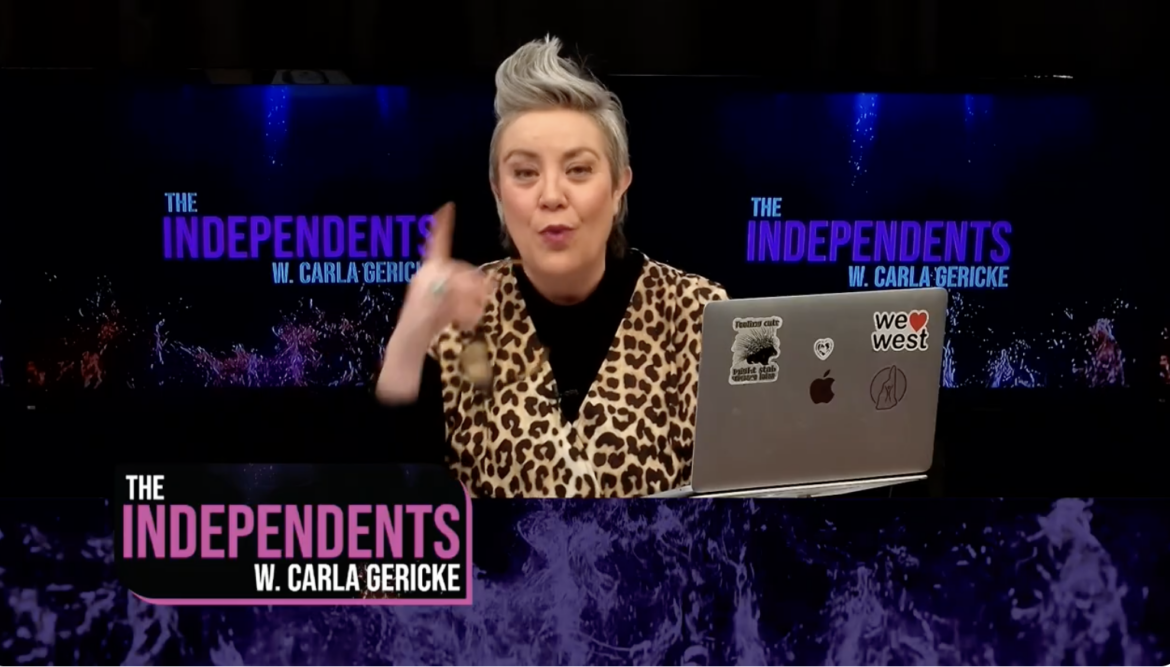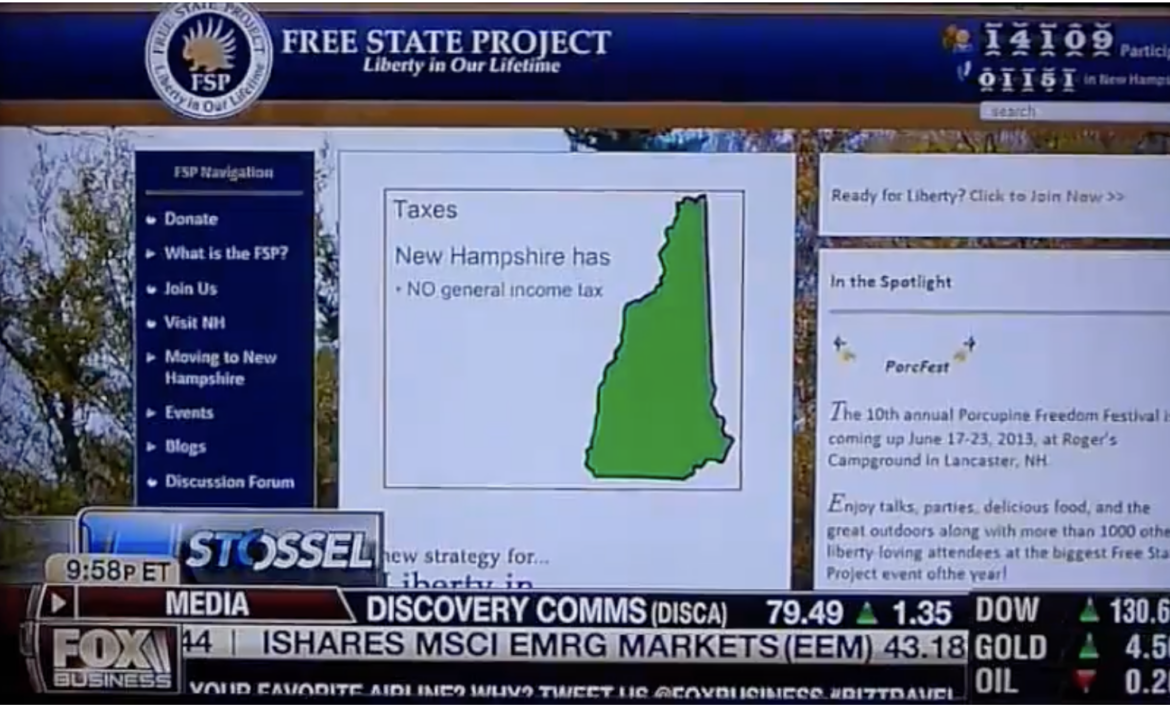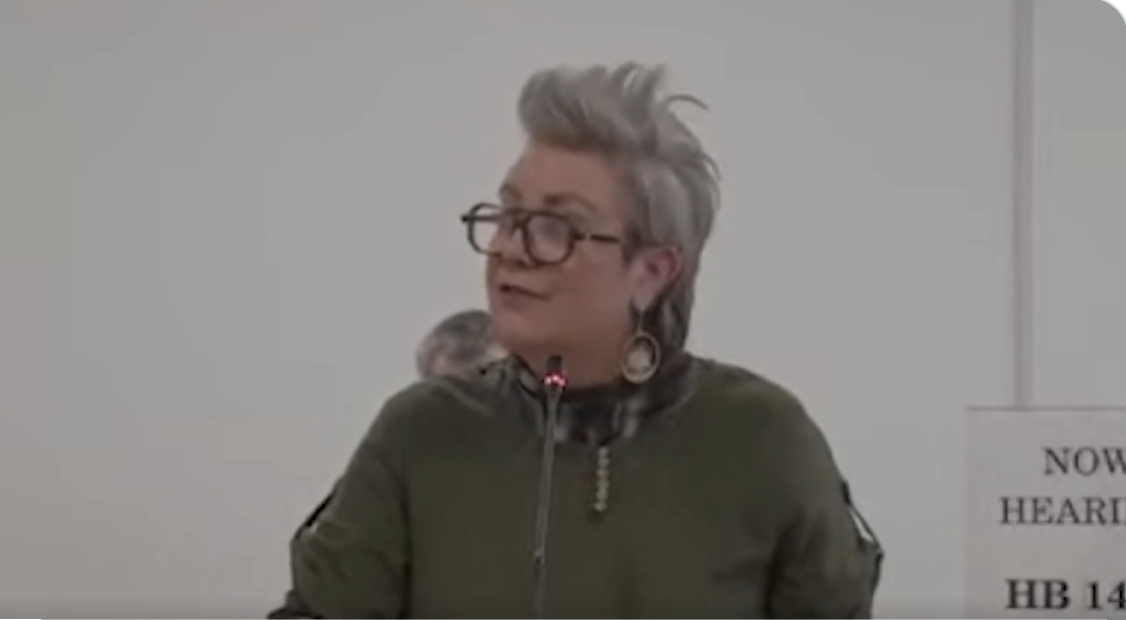
Friday nights on The Independents will evolve into guest nights with “after hours” vibes. This was a test. Everything worked as expected. Except we didn’t discuss The Weare Incident of 2010, where we got arrested and much legal hijinks ensued. Read my landmark First Circuit case Gericke vs. Begin et al instead, and stay tuned… One day, we will capture the story in all its glory!
January 2026
I attended the AFP-NH’s soiree in Sandown on Tuesday, January 6th, 2026. Great turnout for NH’s birthday party. ICYMI: NH formed statehood before the Declaration of Independence, and that means, ahem, that we can secede any damn time we like. Indeed, this would be a good time to rewatch this video and read this article: Boom! Why the Free State of New Hampshire Will Succeed (And Secede)…
BREAKING: Carla Gericke to spearhead New Hampshire independence organization.
— NHExit Now (@nhexitnow) July 10, 2024
NHEXIT rebukes the overreach of the federal government and is dedicated to making New Hampshire a free, independent, and prosperous nation, governed by the people of New Hampshire. pic.twitter.com/tWfdyKc4fq
Here are some photos from the AFP-NH event, where former speaker of the House, Bill O’Brien, and current House Majority Leader, Jason Osborne spoke.


Linguistically speaking what is the order of groups of humans? E.g. Tribe, clan, group, faction, etc.
Linguistically and anthropologically, the terms used for human social groups form several overlapping hierarchies rather than one single strict order. The most common ones depend on the context:
- Evolutionary/political organization scale (Elman Service’s classic typology) — from smallest/simplest to largest/most complex societies
- Kinship/descent group hierarchy — especially common in tribal/segmentary societies
1. Political/Evolutionary Scale of Social Organization
This is the most widely taught hierarchy in anthropology (often called band → tribe → chiefdom → state):
| Level | Typical size | Leadership | Key characteristics | Examples (historical/ethnographic) |
|---|---|---|---|---|
| Band | 15–50 people | Informal, consensus, no fixed leader | Smallest unit, usually hunter-gatherers, egalitarian | !Kung San, Hadza, many Australian Aboriginal groups |
| Tribe | Few hundred – few thousand | “Big man”, elders, situational leaders | Kin-based, segmentary, fluid alliances, mostly egalitarian | Many pastoralist/horticultural groups (Nuer, Maasai, many Native American groups) |
| Chiefdom | Thousands – tens of thousands | Hereditary chief with real authority | Ranked society, some centralization, redistribution | Pre-contact Polynesia, many Mississippian cultures, some African kingdoms |
| State | Tens/hundreds of thousands+ | Centralized government, bureaucracy, monopoly on force | Social classes, taxation, laws, standing armies | Ancient Egypt, modern nations |
This sequence is roughly correlated with increasing population size, economic complexity, and political centralization.
2. Kin-based Hierarchy (inside tribes / segmentary societies)
This is the most common “inside-a-tribe” order of descent/kinship groups (from smallest to largest):
Individual → Nuclear family → Extended family → Lineage → Clan → Phratry → Moiety → Tribe / Sub-tribe
Typical order and rough sizes (very approximate — varies enormously by culture):
| Level | Typical size | Definition / characteristics | Exogamy?* | Common examples |
|---|---|---|---|---|
| Nuclear family | 4–10 people | Parents + children | — | Universal |
| Extended family | 10–30 | Multiple generations living/acting together | — | Most societies |
| Lineage | 30–200 | Descent group tracing from a known (usually recent) common ancestor | Usually | Nuer (minimal → maximal lineages) |
| Clan | 200–5,000+ | Descent group from a (often mythical/distant) common ancestor; usually has a name/totem | Almost always | Scottish clans, many African & Native American groups |
| Phratry | Several clans (thousands) | Group of related clans that act together (like “brother clans”) | Often | Many North American & Northeast Indian tribes |
| Moiety | Roughly half the tribe | The tribe divided into two complementary halves | Usually | Many Australian Aboriginal, Amazonian, and Native American groups |
| Tribe | Few hundred – 50,000+ | Largest named kin/political unit, often containing the above | — | Maasai, Yanomami, many others |
* Exogamy = rule that you must marry outside this group
Quick Summary — Most Common “Ladder” People Usually Mean
When people ask for an “order” like tribe > clan > group > faction, the most standard anthropological answer is:
family/lineage < clan < phratry/moiety < tribe < chiefdom < state
Or, more simply and most frequently used in casual/academic conversation:
family → lineage → clan → tribe → chiefdom → state
(With band as the smallest pre-tribal level, and phratry/moiety as optional mid-level divisions inside some tribes.)
Note: Real societies are far messier than any of these neat schemes — anthropologists have largely moved away from rigid evolutionary stages since the 1980s, but these terms remain very useful as descriptive tools.
are there other terms?
Yes, there are many additional terms used in anthropology, sociology, and ethnography to describe human social groups, especially in kinship-based, tribal, or traditional societies. These terms often fill in gaps between the core levels (family → lineage → clan → tribe → chiefdom → state) or describe alternative/parallel structures.
Here are some of the most common and important additional terms, organized roughly from smaller/more specific to larger or alternative divisions:
Kinship/Descent Group Terms (Mostly Inside Tribes)
- Horde — An older, somewhat outdated term for the smallest mobile group (similar to a band or camp), often used for hunter-gatherers; implies a temporary, fluid gathering (e.g., Australian Aboriginal contexts).
- Sib — Sometimes used interchangeably with clan (especially in older literature); a unilineal descent group (patrilineal or matrilineal) with a shared (often mythical) ancestor.
- Sept — A subdivision of a clan (common in Scottish/Irish clan systems); a smaller branch or segment within a larger clan.
- Phratry — A group of several related clans that recognize a “brotherhood” relationship (often sharing a mythical ancestor or ritual functions); acts as an intermediate level between clan and tribe. Common in many Native American, Melanesian, and some Indian tribal societies.
- Moiety — A division of the entire tribe/society into two complementary halves (e.g., “Earth” vs. “Sky,” or “Upper” vs. “Lower”); often exogamous (must marry into the other half) and creates balanced opposition/reciprocity. Found in many Australian Aboriginal, Amazonian, and some North American groups.
Other Political/Social Organization Terms
- Band / Camp — The smallest stable unit (15–50 people), usually egalitarian hunter-gatherers; sometimes called “horde” in older texts.
- Ethnic group — A larger cultural/identity-based unit (beyond kinship), often overlapping with or larger than a tribe; used when kinship is less central.
- Conical clan — A ranked or hierarchical clan structure (common in some chiefdoms), where descent lines are ordered by seniority.
- Kindred — An individual’s personal network of relatives (bilateral, not a fixed group); overlaps with others’ kindreds and isn’t a corporate descent group.
Modern/Sociological Scales of Group Size
Beyond traditional anthropology, some researchers propose more universal layers based on cognitive/social limits (e.g., Dunbar’s number ~150 for stable personal relationships), leading to approximate nested layers like:
- Intimate support clique (~5 people)
- Sympathy group (~15)
- Band (~30–50)
- Cognitive group / stable relationships (~150)
- Clan/tribe level (~500–1,500+)
- Larger linguistic/ethnic/political units
Quick Comparative Table of Additional Terms
| Term | Typical Level/Size | Key Feature | Common In |
|---|---|---|---|
| Horde | Very small (~10–30) | Temporary/mobile camp | Hunter-gatherers, older ethnographies |
| Sept | Small subdivision | Branch within a clan | Scottish clans, some Celtic groups |
| Sib | Clan-sized | Often synonymous with clan | Older anthropological texts |
| Phratry | Medium (several clans) | “Brother clans”; alliance/ritual grouping | Native American, Melanesian tribes |
| Moiety | Large (half the society) | Dual division of whole group; reciprocity | Australian Aboriginal, many dual-organization societies |
These terms aren’t part of one universal hierarchy — different cultures emphasize different ones (e.g., moieties are rare in Africa but common in Australia). Modern anthropology often avoids rigid evolutionary schemes and focuses on how groups function in specific contexts, but these labels remain useful descriptive tools. If you’re interested in examples from a particular region (e.g., Native American, African, or Indian tribal systems), let me know!
Kindred — An individual’s personal network of relatives (bilateral, not a fixed group); overlaps with others’ kindreds and isn’t a corporate descent group… etymology and usage over time
Etymology of “Kindred”
The word kindred originates from Old English (pre-1150), appearing as forms like cynrǣden or kinrǣden. It is a compound of:
- cynn (or kin): meaning “family, race, kind, sort, lineage” (from Proto-Germanic *kunja-, ultimately from the PIE root *gene- “give birth, beget”).
- -rǣden (or -red/-rede): a suffix meaning “condition, state” (from Old English rǣden, related to “ready” or “conditioned/disposed”).
Thus, it literally meant “condition of kin” or “kinship/state of being related by blood.” An epenthetic (inserted) -d- appeared in the spelling around the 15th–17th centuries (as in words like “thunder” or “sound”), leading to the modern form kindred.
- Early meanings (Middle English, c. 1200–1400): Primarily “family, lineage, blood relations, kinsfolk, race, nation, or tribe.”
- It functioned as both a noun (one’s relatives collectively) and later an adjective (of similar nature, related by blood or affinity).
- By the 14th century, it also gained figurative senses like “similar in kind” or “kindred spirits” (people with shared attitudes/beliefs).
The term has remained remarkably stable, with core meanings of blood ties and relatedness persisting into modern English, though everyday use often emphasizes emotional or spiritual similarity today.
Usage in Anthropology Over Time
In anthropological kinship studies, kindred has a more precise, technical meaning: an ego-centered (or egocentric) network of relatives traced bilaterally (through both mother and father), without forming a fixed, corporate descent group. It contrasts sharply with unilineal structures like lineage (traced through one line to a known ancestor, forming a corporate unit) or clan (a larger, often dispersed group claiming mythical/shared descent, usually exogamous and with social functions like identity or alliance).
Key historical developments:
- Pre-20th century/early roots: The general sense of “kinsfolk” or “blood relations” appeared in historical/legal contexts (e.g., medieval English law on inheritance). Early comparative kinship studies by Lewis Henry Morgan (1871, Systems of Consanguinity and Affinity) laid groundwork by mapping global patterns, including bilateral/cognatic systems where kindred-like networks dominate.
- Early–mid-20th century (rise in technical usage): British structural-functionalists like A.R. Radcliffe-Brown (e.g., in works on Australian Aboriginal and Andaman societies, 1922–1950) emphasized kinship as interlocking social roles and networks. Kindred described fluid, personal bilateral ties in societies lacking strong unilineal groups. Meyer Fortes and others contrasted it with African unilineal descent groups (lineages/clans). George Peter Murdock (1949, Social Structure) popularized it in American anthropology, classifying kindred as typical of bilateral/Eskimo kinship systems (e.g., Inuit, Yupik, and most Western societies), where the nuclear family is emphasized and relatives fan out bilaterally without corporate boundaries.
- Mid-20th century onward: The term became standard for describing ego-centered groups in bilateral societies. Anthropologists like Jack Goody, Freeman (1961, on the concept of kindred), and later David M. Schneider (1984 critique) highlighted its fluidity — no two people (except full siblings) have identical kindreds, and it changes over time/life stages. It is not ancestor-focused (unlike lineages/clans) but ego-focused, ephemeral, and useful for personal support, marriage choices, or inheritance in non-unilineal contexts.
- Modern/post-1980s: With shifts away from rigid typologies (e.g., critiques by Schneider and others), kindred is still widely used descriptively, especially in studies of Western, Southeast Asian (e.g., Iban), or hunter-gatherer societies. It underscores individual networks rather than group corporateness, reflecting broader moves toward processual and cultural understandings of kinship.
In summary, while the word’s everyday etymology has ancient Germanic roots tied to “kin-condition,” its specialized anthropological usage crystallized in the 20th century as a key contrast to unilineal descent groups — emphasizing personal, bilateral, and non-corporate ties in many societies, including our own.
Kindred Spirits… deep dive
“Kindred Spirits” — A Deep Dive
The phrase “kindred spirits” evokes a profound, almost magical sense of connection — that rare feeling of meeting someone who truly “gets” you on a deep level, as if your souls recognize each other instantly. It’s not always romantic; it often describes unbreakable friendships, creative partnerships, or even fleeting but meaningful encounters. The term bridges the anthropological concept of kindred (personal networks of relatives, as we discussed earlier) with a more poetic, spiritual dimension of shared essence or “spirit.”
Etymology and Historical Origins
- “Kindred” comes from Old English cynrǣden (“kin-condition” or “state of being related”), combining cynn (“kin, family”) and -rǣden (“condition”). It originally referred to blood relatives or family ties.
- “Spirit” derives from Old French espirit (meaning “soul, courage, vigor, breath”), rooted in Latin spiritus (“breath, soul”).
- The compound “kindred spirit” first appeared in print around 1706, in the poetry of Isaac Watts (a hymn writer and theologian), who used it to describe people sharing similar qualities or inner nature.
- By the mid-19th century (around the 1840s–1850s), it gained idiomatic popularity in English literature and letters, often as “kindred soul.” George Eliot referenced it in an 1849 letter: “You won’t find any kindred spirits at Plongeon.”
The phrase expanded from literal kinship to metaphorical “like-minded souls” during the Romantic era, when ideas of deep emotional and intellectual affinity flourished.
Popularization in Literature: Anne of Green Gables
The term owes much of its modern cultural resonance to L.M. Montgomery‘s 1908 classic Anne of Green Gables. The imaginative orphan Anne Shirley frequently uses “kindred spirits” to describe people who resonate with her vibrant inner world — starting with the shy Matthew Cuthbert, then her best friend Diana Barry, and even unexpected figures like the stern Aunt Josephine Barry.
One of the most beloved quotes captures the optimism it inspires:
“Kindred spirits are not so scarce as I used to think. It’s splendid to find out there are so many of them in the world.”
— Anne Shirley (L.M. Montgomery, Anne of Green Gables)
This line reflects Anne’s growing realization that deep connections aren’t rare — they’re everywhere if you’re open to them. Montgomery herself drew from real-life friendships (like her “bosom friends” in youth) and possibly from earlier works she read, such as Elizabeth von Arnim’s Elizabeth and Her German Garden (1898). The phrase became synonymous with heartfelt, platonic bonds that feel fated.
Here are a few classic illustrations of Anne and Diana as kindred spirits — the ultimate bosom friends whose connection defines the term:
These artistic depictions capture the joy, loyalty, and instant understanding that make Anne and Diana iconic kindred spirits.
Modern Usage and Psychological Significance
Today, “kindred spirits” describes anyone with whom you share core values, humor, worldview, or an effortless flow of conversation — often feeling like “no time has passed” even after years apart. It’s commonly used for:
- Platonic friendships — the deepest, most supportive kind.
- Creative or intellectual partners — artists, writers, or thinkers who “vibe” instantly.
- Romantic connections — though not always; many distinguish it from soulmates (more intense, growth-oriented, sometimes karmic) or twin flames (mirroring for transformation).
Psychologically, these bonds provide companionship, emotional support, and a sense of belonging — boosting well-being and reducing isolation. Signs you’ve met one include:
- Instant familiarity (“I feel like I’ve known you forever”).
- Shared wavelength — finishing sentences, similar reactions, effortless understanding.
- Comfort in vulnerability — no need to explain yourself.
- Calm presence — being around them feels like “home.”
Here are some evocative modern artistic representations of that deep, soul-level connection:
In essence, “kindred spirits” reminds us that profound understanding isn’t reserved for romance or family — it’s a human gift that can appear anywhere, enriching life with lightness, recognition, and joy. As Anne would say, it’s splendid indeed. Have you ever met someone who felt like a kindred spirit?
what is “sanity”?
Sanity is one of those words that sounds very solid and clear until you actually try to pin it down.
Here are the main ways people currently use and understand the concept of “sanity” (roughly ordered from most concrete → most philosophical):
Psychiatric / Legal meaning (most formal)
≈ “Not currently meeting criteria for a major psychotic disorder”
In practice this usually means:
- You know what year/month/day it is (orientation to time)
- You know where you are (orientation to place)
- You know who you are (orientation to person)
- You can tell the difference between things that are actually happening vs things your mind is generating (reality testing)
- You can form a coherent chain of thought most of the time
Everyday social usage (“are you sane?”)
≈ “Do you react to situations in roughly the same range of emotion/intensity that most people in our culture would consider normal/reasonable?” Examples of things that quickly get labeled “insane” in casual speech:
- Screaming at length at a barista because the oat milk was frothed wrong
- Genuinely believing the TV news anchor is sending you secret personal messages
- Burning your furniture because you think the colors are plotting against you
- Trying to fistfight a cloud
Philosophical / existential meaning (the spicy one)
Sanity here is often understood as:
comfortable self-deception about the nature of reality + willingness to play along with the current shared cultural hallucination at a socially acceptable level In this sense, sanity is not “seeing reality correctly” —
it’s seeing reality in approximately the same distorted way that most other people around you see it. → The more honestly & deeply someone looks at existence, death, consciousness, meaninglessness, cosmic scale, moral arbitrariness, etc…
the more likely they are to be perceived as “losing sanity” by the majority. David Foster Wallace captured this vibe well when he said something close to:
“Sanity is the ability to keep ordinary existential terror at a low enough simmer that you can still function at the grocery store.”
Quick summary table of “sanity” across contexts
| Context | Sanity ≈ | Insanity ≈ | Who decides? |
|---|---|---|---|
| Courtroom | Can understand proceedings + consequences | Can’t understand proceedings + consequences | Judge + psychiatrists |
| Psychiatric ward | Reality testing mostly intact | Delusions/hallucinations dominate | DSM-5 + psychiatrists |
| Family dinner table | Emotions/reactions in “normal” range | Reactions wildly disproportionate | Collective family gaze |
| Late-night philosophy | Can tolerate ordinary amount of absurdity | Has completely stopped pretending life makes sense | Your friends’ discomfort level |
| Zen / mystical | Comfortable with not knowing / no-self | Still clinging to solid ego & meaning | The teacher (sometimes ironically) |
Shortest honest answer possible:
Sanity is whatever level of denial, distortion, and selective attention
the majority of your current social/temporal bubble needs you to maintain
in order to keep treating you as a predictable, manageable human being. 😄
How much sanity would you personally like to keep today?
Happy New Year, y’all.
What will the New Year bring you?
Whatever you focus on.
If you do one thing in 2026, internalize these two words: pay attention.
Not as mindfulness fluff.
As agency.
As authorship.
Last year, I worked on showing up.
Relentlessly.
For 365 days straight.
On X.
LIVE.
Unscripted.
One hundred percent me.
Why?
Because when I first floated the project past my parents, they responded in eerie unison:
“Why?”
That synchronized Why? triggered a Why not!? so strong I went and did the damn thing.
Yes—My Living Xperiment started as a classic Don’t Tell Me What to Do spite project from a woman in her fifties. But it turned into something else entirely.
I learned a lot living out loud.
Mostly how to forgive myself—constantly, in real time.
For losing my train of thought.
What was I saying? What??? Black-screen brain again.
For transposing numbers.
Did I just say I quit drinking in 2026 instead of 2017? Dummy.
For bad hair days.
For looking stoned.
For realizing I’d spent my entire life defending the label “crazy”—and deciding, finally, to drop it.
For crying on air because my mother had just died. Literally thinking, I better do my MLX now before the meltdown. (I am an ugly crier. I am also vain. Now the world knows.)
Forgiveness, it turns out, isn’t a virtue exercise.
It’s a practice.
One you have to return to—again and again—to stay coherent.
All told, I created about a hundred hours of content.
(You’re welcome, NSA.)
More importantly, it taught me who I am when no one rescues the moment.
Talking to yourself out loud teaches you about yourself.
Recording it publicly adds the test: How well do you really know yourself?
Are you who you think you are?
Am I?
Turns out—yes.
And also… always still discovering.
I noticed the themes I kept returning to: living alcohol-free, fasting, goal-setting, Stoicism, knowing yourself, knowing what you don’t know, cooking, philosophy, drama, community.
And the realization that drama is the byproduct of community. It’s baked into its success.
People only fight about things they care about.
And figuring out what you care enough to fight for is half the battle.
I tested my temperament, my skills, my mindset, my confidence.
Basically, I tested my moxie—to keep plunging ahead no matter what.
And when you distill it, that’s life.
Which brings me to the crux of the experiment:
How you spend your time is how you govern yourself.
And how you govern yourself is who you are.
The more you align your thoughts, your words, and your deeds—mind, body, soul—the more coherence you find.
And coherence isn’t just personal.
It’s the prerequisite for any free society.
My word for 2026 is broadcast.
“Not just because I’m a broad and I’m casting a spell,” I joked—air-sprinkling imaginary glitter over the audience at the Free State Volunteer Appreciation Party a few weeks ago—but because it’s time.
Broadcast doesn’t mean louder.
It means truer.
Time to raise our voices and attract those awake enough to hear.
Time for politics to be downstream from culture.
Time for New Hampshire to shine as a beacon for conscious builders everywhere.
The beauty of the Free State movement is how intentional it is.
You have to choose freedom.
Take action.
And show up to defend that choice—
Every.
Single.
Day.