The Lie My Nerves Told Me
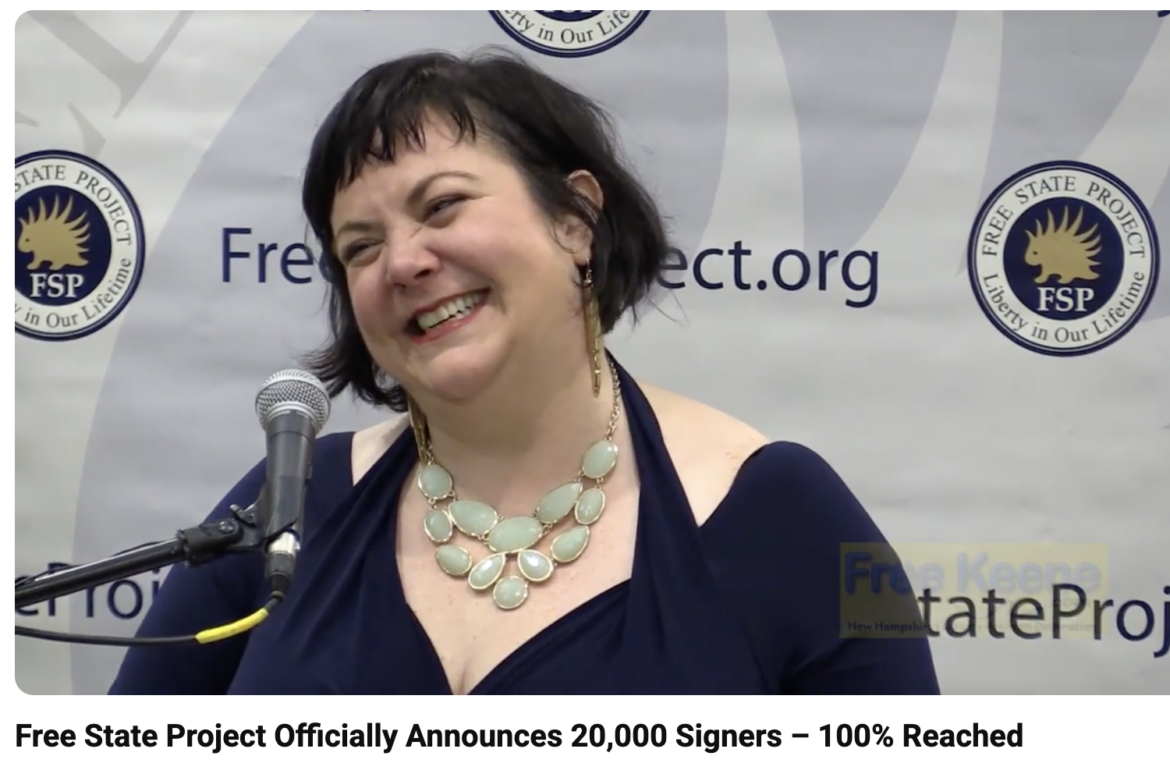
Tbh, I dread the Free State Project’s Porcupine Day celebrations (get your tix today) because of this video. It’s from an earlier chapter of my life, and every year when it resurfaces, I cringe a little before clicking play.
I’m embarrassed to see myself like this. Not because I was weak—but because I know how much pain I was carrying then. I know, viscerally, what was happening inside my body when that footage was recorded.
I can see my malaise.
I can see it in my posture.
In my puffy face.
In my forced cheeriness.
What you’re watching isn’t just a woman with stage fright pushing through a press conference. You’re watching a woman hiding blind panic—terrified of a full dissociative, out-of-body experience at the podium—forcing herself to stay present through sheer will.
With a grin.
While inside: white static brain.
This is what a nervous system stuck in a loop looks like.
My nerves demanded I drink.
The alcohol exacerbated my autoimmune issues.
The autoimmune issues made it hard to exercise.
The lack of exercise added to my weight gain.
The weight gain made presenting in public hard.
Hard public things made me nervous.
The nerves demanded I drink.
Round and round it went.
At the time, I thought this was normal.
I thought this was adulthood.
I thought this was stress.
I thought this was just how life worked.
It wasn’t.
It was conditioning.
The most insidious part of that loop wasn’t the alcohol itself—it was the story attached to it.
I need a drink.
That sentence feels true when your nervous system is dysregulated. It feels reasonable. It feels earned. It even masquerades as self-care.
But here’s the realization that cracked everything open for me:
“Needing” a substance is a lie you tell yourself.
A very convincing one.
A very socially rewarded one.
But a lie nonetheless.
The truth—the uncomfortable, non-marketable truth—is this:
Alcohol is a neurotoxin.
It has no health benefits.
None.
Not for stress.
Not for nerves.
Not for sleep.
Not for connection.
Not for confidence.
What I had been calling a “reward” was poison.
And once I allowed myself to really see that—without flinching, without bargaining, without romanticizing—the spell broke.
This wasn’t a moral decision.
It wasn’t a willpower flex.
It wasn’t deprivation.
It was awareness.
Awareness that my nerves were lying to me.
Awareness that I was “rewarding” myself for surviving stress by slowly making my body weaker, sicker, heavier, and afraid.
Awareness that the loop only continued because I kept feeding it.
So I stopped.
I quit drinking in December 2017.
What followed wasn’t instant renewal. It was something quieter—and far more powerful.
My nervous system learned it could calm itself.
My body stopped fighting me.
Movement became possible again.
Public life became less threatening.
Confidence returned—not as armor, not as bravado, not as “fake it till you make it.”
It returned as recognition.
Back to my soul state.
Back to myself.
People noticed. Then something unexpected started to happen.
People started coming up to me.
Quietly.
Sometimes emotionally.
They told me they stopped drinking too.
Or drank less.
Or finally questioned the story they’d been telling themselves about “needing” it.
They told me watching my change gave them permission to imagine their own.
That still humbles me.
Because this is what self-ownership looks like at the human scale.
No mandates.
No interventions.
No force.
Just one woman telling herself the truth—and choosing differently.
If my greatest contribution ends up being that Freestaters made voluntary choices that—collectively—defunded New Hampshire Liquor Stores by thousands and thousands of dollars, I’m fine with that.
That’s voluntary human action, right there.
Your awareness is the exit ramp.
And once you see the loop, you can’t ignore it.
You don’t need a drink.
You need the truth.
And when you claim it—quietly, honestly, without asking permission—you take yourself back: one moment of awareness at a time. Your presence in the now.