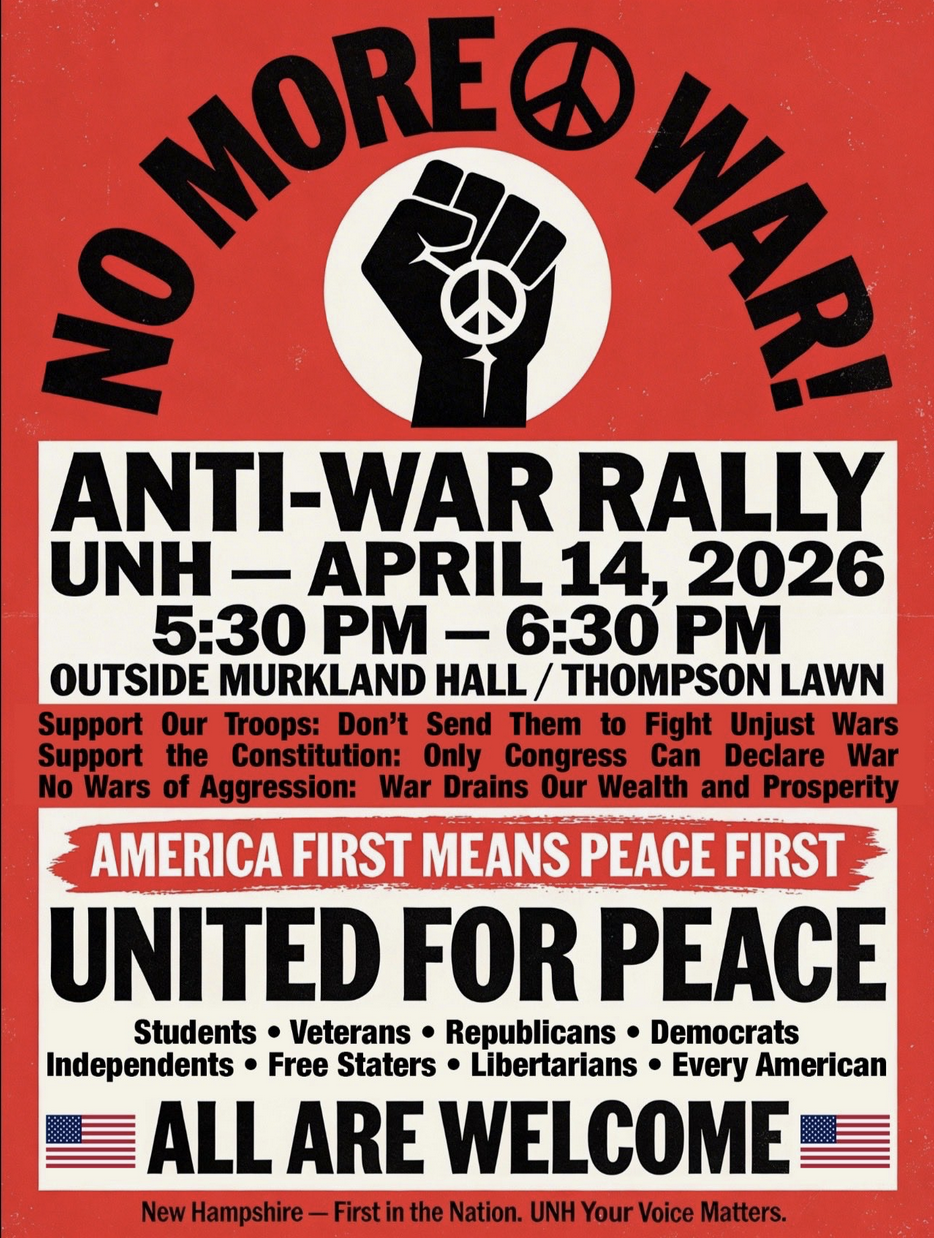
In war, all blood runs red. The ones who make the wars are not the ones who suffer the consequences, in fact, they profit no matter what (read Smedley Butler’s WAR IS A RACKET; see summary below). I am pro-leader-duels or hand-to-hand combat in a ring while we watch it broadcast on the telly, though.
GROK: Summarize
“War Is a Racket” is a short 1935 anti-war pamphlet (originally a speech) by Major General Smedley D. Butler, a highly decorated U.S. Marine Corps officer and two-time Medal of Honor recipient. Drawing on his 33+ years of service—including interventions in Latin America, China, and World War I—Butler argues that war is not fought for ideals like democracy or national defense, but as a profitable “racket” orchestrated by a small elite of bankers, industrialists, and munitions makers at the expense of soldiers and the public.
Core Thesis
Butler opens with one of the book’s most famous passages:
“WAR is a racket. It always has been. It is possibly the oldest, easily the most profitable, surely the most vicious. It is the only one international in scope. It is the only one in which the profits are reckoned in dollars and the losses in lives. A racket is best described, I believe, as something that is not what it seems to the majority of the people. Only a small ‘inside’ group knows what it is about. It is conducted for the benefit of the very few, at the expense of the very many.”
He reflects on his own career, admitting he acted as “a high class muscle man for Big Business, for Wall Street and the bankers” — essentially a “racketeer for capitalism.” He lists operations he supported that protected American corporate interests in oil (Mexico), banking (Nicaragua, Haiti), sugar (Dominican Republic), and more, rather than serving broader American security.
Who Makes the Profits? (Chapter 2)
Butler details how World War I cost the U.S. about $52 billion (roughly $400 per person at the time), with the debt burden falling on current and future generations through taxes. Normal peacetime business profits ranged from 6–12%, but wartime profits exploded: often 100%, 300%, or even 1,800%. He cites specific examples like DuPont (explosives), steel companies, and others that saw massive windfalls from munitions, supplies, and related industries. Bankers also profited handsomely from Liberty Bonds and financing.
Who Pays the Bills? (Chapter 3)
The costs are borne by the masses:
- Soldiers suffer death, maiming, psychological trauma, and inadequate support upon return (Butler describes visiting veterans’ hospitals filled with broken men).
- Families and civilians pay through higher taxes, inflation, and economic hardship.
- The public is manipulated with patriotic propaganda to enlist, buy bonds (often at a loss), and support the war, while the “inside group” reaps rewards.
Butler emphasizes that the human toll—lives lost or ruined—is incalculable, while profits are cold cash.
How to Smash This Racket! (Chapter 4) and “To Hell with War!” (Chapter 5)
Butler proposes three concrete steps to eliminate the profit motive and prevent unnecessary wars:
- Take the profit out of war — Conscript capital, industry, and labor alongside soldiers. Limit wartime pay for executives, bankers, and workers in war industries to the same low rate as soldiers (e.g., $30/month), with the same risks and sacrifices.
- Restrict who can vote for war — Hold a limited plebiscite where only those of military age (who would actually fight) get to vote on declaring war.
- Limit the military to defense — Restrict U.S. forces to protecting the homeland (e.g., within 200 miles of the coast), forbidding offensive interventions abroad.
He concludes passionately: wars for any reason other than direct home defense are simply rackets, and he declares, “To hell with war!”
Overall Impact and Legacy
The pamphlet is blunt, straightforward, and based on Butler’s firsthand experience rather than abstract theory. It critiques the military-industrial complex (decades before Eisenhower coined the term) and U.S. imperialism in the name of corporate interests. Written during the Great Depression, it resonated with veterans and the public disillusioned by World War I’s aftermath and the Bonus Army events. It remains a classic anti-war text, often cited for its relevance to later conflicts.
In short, Butler’s message is that war masquerades as patriotism but functions as a scheme where a tiny elite gets rich while the many pay in blood, taxes, and suffering. His proposed remedies focus on removing incentives for war profiteering and ensuring democratic accountability tied directly to those who bear the costs. The book is short (around 50 pages in pamphlet form) and still widely read as a powerful indictment of war’s hidden economics.