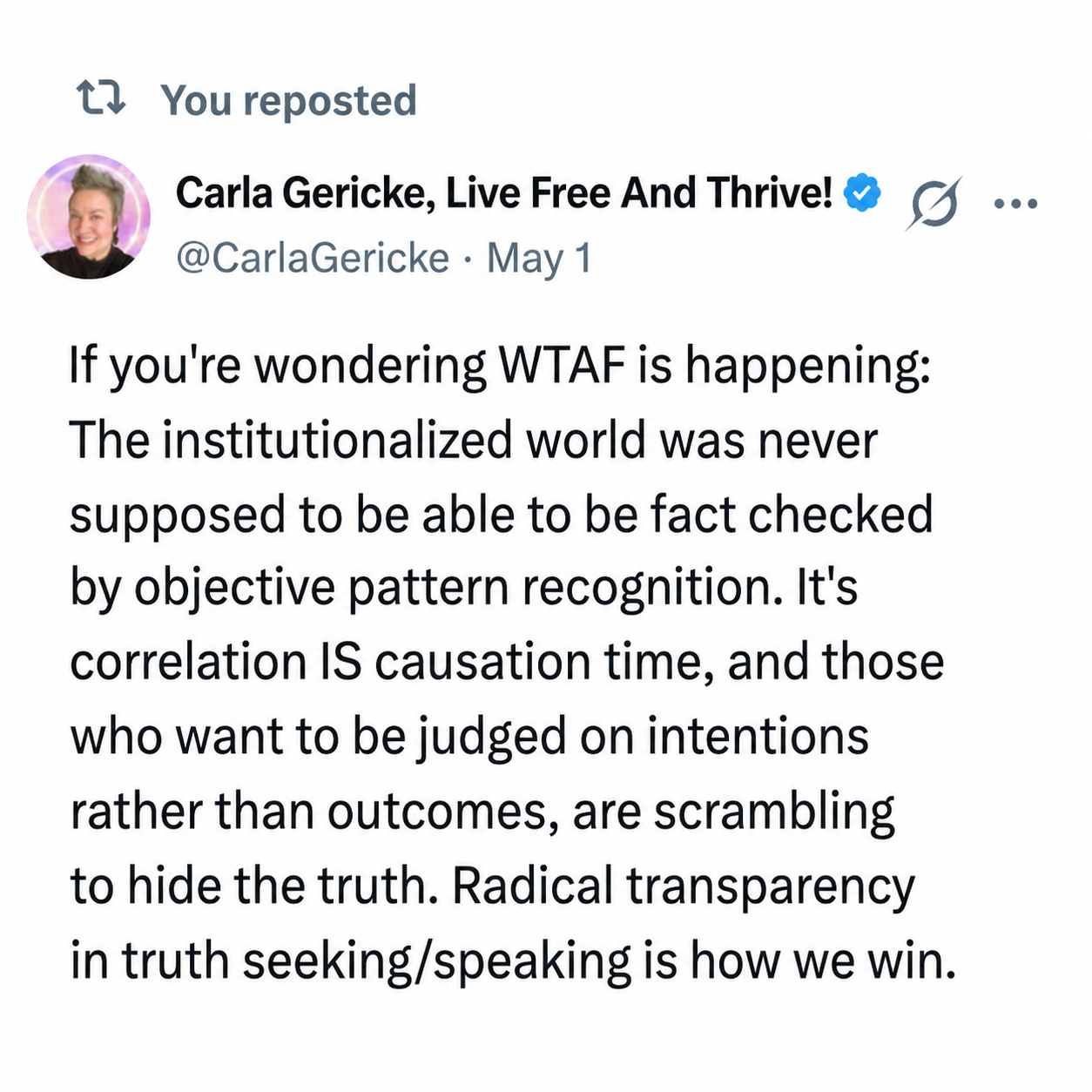
Yes—radical transparency can work, but only with deliberate safeguards. Carla Gericke’s core point (institutions scrambling because AI-enabled pattern recognition now forces outcome-based scrutiny over stated intentions) holds up well. Radical transparency—proactive, near-total openness of data, decisions, processes, and failures—amplifies that shift by making the raw material for scrutiny available at scale. However, unchecked openness creates real risks: privacy erosion, psychological defensiveness, security leaks, misinformation overload, competitive harm, and unintended erosion of trust.
The good news: proponents like Ray Dalio (who popularized the term in a high-stakes business context at Bridgewater Associates) and recent government experiments (e.g., HHS and DHS “Radical Transparency” portals on terminated contracts and spending in 2025) show that safeguards can make it practical rather than utopian or destructive.
Core Risks Without Safeguards
- Privacy and personal harm: Raw data dumps can expose sensitive personal details, health info, or identities, leading to doxxing, harassment, or chilling effects on honest internal discussion.
- Psychological and cultural backlash: People become guarded, defensive, or anxious when every mistake is immediately public. This can reduce candor rather than increase it.
- Misuse and overload: Bad actors twist partial data; low-context consumers draw wrong conclusions; sheer volume creates noise that obscures signal.
- Security and competitive damage: Leaking trade secrets, national security details, or negotiation strategies harms the very institutions being held accountable.
- Legal and trust erosion: Violating privacy laws or releasing inaccurate/incomplete data can backfire, reducing public trust instead of building it.
Practical Safeguards (Proven Approaches)
These aren’t theoretical—they come from Dalio’s Principles, corporate implementations, open-government experiments, and AI-governance frameworks. The goal is maximum openness by default, with narrow, transparent, and accountable exceptions.
- Keep exceptions extremely rare and justify them explicitly (Dalio’s rule)
Treat every proposed exception as an “expected value calculation” weighing second- and third-order consequences. Legitimate carve-outs include:
- True personal privacy (health, family matters unrelated to job performance).
- National security, active law enforcement, or ongoing negotiations.
- Trade secrets or proprietary IP with clear competitive harm.
Always explain why something is withheld and make the decision itself transparent. This preserves the culture of openness.
Build psychological safety and a culture of responsible use
Transparency without trust creates toxicity. Require training on how to handle sensitive data (“weigh things intelligently”). Focus on ideas/outcomes, not people. Leadership must model vulnerability first. Provide context alongside raw data (successes and failures). Only grant full access to people proven to handle it responsibly; revoke it (or remove people) if they weaponize it.
Tiered access and technical controls
- Real-time access for a small trusted inner circle; delayed or redacted access for broader groups.
- Anonymization, redaction tools, and audit logs.
- Searchable, preserved, machine-readable formats (perfect for AI pattern recognition) with version history.
- In government/AI contexts: explainability requirements so citizens understand how decisions were made, not just raw outputs.
Legal and procedural guardrails (“maximum extent permitted by law”)
Use existing frameworks like FOIA exemptions but flip the default: publish proactively, redact narrowly. Require impact assessments for data releases. Include redress mechanisms (easy ways to contest misuse). Recent U.S. agency portals follow exactly this model—full contract/spending disclosure with built-in privacy and security filters.
Phased rollout + continuous feedback
Start with high-value, low-risk areas (budgets, contracts, meeting recordings with opt-outs). Measure effects on trust, decision quality, and accountability. Adjust based on real outcomes rather than ideology.
How This Fits Gericke’s Vision
Carla herself has advocated for open-source government, searchable databases of all state-collected info, body/dash cams, and strong privacy/trust laws to prevent surveillance overreach. That’s compatible with the safeguarded model: radical openness on institutional performance paired with narrow protections for individuals and genuine secrets. Tools like AI make this feasible at scale—pattern recognition thrives on clean, comprehensive data, but only if the data pipeline includes safeguards against abuse.
Bottom line: Radical transparency isn’t all-or-nothing. With these safeguards, it becomes a high-ROI strategy for exactly the accountability shift Gericke describes. Without them, it risks becoming performative or counterproductive. The evidence from Bridgewater, recent federal initiatives, and open-government research shows the balanced version works—and it’s worth pushing for in places like New Hampshire’s Free State experiment.