free state project
NH Shockers: Pronoun Policing, Crooked Judges, and Sununu’s Comeback Bid (Manch Talk 10/22/25)
Concord cops correct a suspect’s pronouns in a wild transgender case. Judge Marconi—fresh off controversy—is back on the Supreme Court bench while her husband faces trial. John E. Sununu jumps into the federal Senate race—can he really be the Comeback Kid? Plus: Free Ian, local city elections, and insider New Hampshire details you won’t hear anywhere else!
This post also serves as Day 295 of My Living Xperiment.
Thanks to the incredible work at The Content Factory, I was included with real estate experts Jan Ryan, Broker Owner of RE/MAX Direct in San Diego County, CA, and Rebecca Hidalgo, CEO/Designated Broker at Integrity All Stars Realty in Chandler, AZ in The Spruce with this article, Real Estate Agents Agree: This One Home Feature Always Sells a Home Faster.
My quote:
Carla Gericke, Realtor at Porcupine Real Estate in New Hampshire, says natural light is of utmost importance to her clients, especially since winters in the area can feel long, dark, and dreary.Â
“When you walk into a sun-drenched kitchen or a living room with south-facing windows with a prospective buyer, you can practically watch their shoulders drop,” she says. “Light impacts mood, productivity, and even health, so homes that maximize daylight feel instantly more inviting and uplifting.”
Buyers are often looking for big windows, open layouts that don’t block the sun, and an orientation that captures morning and afternoon light.
So if you’ve been considering replacing your windows or removing that old, overgrown tree blocking the light from your home, now might be a good time to do it.
Fact-Check Carla Gericke’s Statements about New Hampshire from the Dr. Phil Show Transcript
The transcript appears to be from a discussion (likely featuring a guest from New Hampshire) speculating on what the state might look like as an independent country. I’ll break down the key factual claims one by one, verifying them against reliable data. Opinions (e.g., “prosperous” or “like a little Hong Kong”) are noted as such but not fact-checked, as they’re subjective. All data is current as of October 2025, drawing from U.S. Census estimates, World Population Review, and official state sources.
1. “New Hampshire… would be a prosperous Little Country geographically”
- Verdict: Subjective, but geographically accurate as a “little country.”
- New Hampshire is one of the smallest U.S. states by land area, ranking 46th out of 50 at approximately 8,953 square miles (23,187 km²) of land (total area including water: ~9,350 sq mi or 24,214 km²). This is comparable to small sovereign nations like Slovenia (~7,827 sq mi) or Kosovo (~4,203 sq mi), making it a “little country” in geographic terms.
- Prosperity is opinion-based but supported by NH’s high median household income (~$90,000 in 2023, 7th highest in the U.S.) and low poverty rate (~7%). As an independent nation, its economy (currently ~$86 billion GDP) could rank it among mid-tier small economies like Slovenia or Latvia.
2. “[We’d be] bigger than countries in Europe population wise”
- Verdict: True.
- New Hampshire’s population is estimated at ~1.41 million as of mid-2025.
- This exceeds the populations of at least 18 European countries, including:
- Iceland (~399,000)
- Luxembourg (~661,000)
- Malta (~535,000)
- Cyprus (~1.27 million)
- Latvia (~1.83 million, but close—NH edges it out in recent estimates)
- Smaller microstates like Liechtenstein (~39,000), San Marino (~34,000), Monaco (~39,000), Andorra (~80,000), and Vatican City (~800).
- For context, NH’s population is similar to that of Estonia (~1.37 million) or just below Lithuania (~2.86 million). It would rank around 150th globally by population, akin to small European nations.
3. “[We’d be] four times the size of Iceland”
- Verdict: Mostly true if referring to population; false if referring to land area.
- The phrasing is ambiguous (“size” after mentioning “population wise”), but context suggests population.
- Population: NH (~1.41 million) is about 3.5–3.6 times larger than Iceland’s (~399,000). Close enough to “four times” for casual speech.
- Land area: NH (~8,953 sq mi) is only ~23% the size of Iceland (~39,768 sq mi or 103,000 km²). Iceland is vastly larger geographically.
- Iceland is one of Europe’s sparsest countries (density: ~4 people/sq mi), so NH would indeed be “bigger” population-wise despite being much smaller in area.
4. “[We’d] be able to export energy [because] New Hampshire has a nuclear plant that no one talks about”
- Verdict: True on the nuclear plant; plausible (but hypothetical) on energy exports.
- New Hampshire has one operating nuclear power plant: Seabrook Station in Seabrook, NH (a 1,244-megawatt pressurized water reactor, operational since 1990). It generates ~55% of the state’s electricity and supplies carbon-free power across New England (e.g., to Massachusetts and Vermont utilities). It’s often under-discussed compared to larger plants, but it’s a key regional asset.
- As an independent country, NH could export energy via existing grid ties (e.g., to ISO New England). Currently, Seabrook saves New England consumers ~$500 million annually in emissions reductions and low-cost power. No other nuclear plants exist in NH, and it’s the state’s only major baseload power source beyond renewables/hydro.
5. “[We] have a deep sea port”
- Verdict: True.
- New Hampshire’s Port of Portsmouth (on the Piscataqua River) is the state’s only deep-water port, with a 45-foot (14-meter) channel depth suitable for large vessels (e.g., container ships up to 1,000+ feet). It handles ~4.8 million tons of cargo annually, including international freight, and supports the U.S. Navy’s Portsmouth Naval Shipyard.
- It’s strategically located ~40 miles north of Boston, serving as a gateway for northern New England trade. As a sovereign nation, it could function like a compact trade hub (e.g., similar to Estonia’s ports).
6. “[New Hampshire] could become like a little Hong Kong to the whole Eastern Seaboard where we’re more prosperous than we could be under [the U.S.]”
- Verdict: Speculative opinion, but plausible based on assets.
- This is hypothetical and not fact-checkable, but NH’s combo of a deep port, nuclear energy, educated workforce (highest high school graduation rate in the U.S.), and proximity to Boston/NYC (~1-hour drive) could position it as a trade/finance hub. Hong Kong (pop. ~7.5 million, area ~426 sq mi) thrives on its port and low taxes—NH already has no income/sales tax, which boosts prosperity. However, independence would introduce challenges like defense, currency, and trade barriers.
Overall Assessment
Most factual claims hold up well, with the Iceland “size” comparison being the only minor stretch (likely intentional hyperbole for population). The vision of NH as a prosperous mini-nation is optimistic but grounded in its real strengths: compact geography, energy independence potential, and trade access. If independent, it might resemble a scaled-down version of Singapore or Luxembourg—small, wealthy, and export-focused—rather than Hong Kong. For deeper dives, check U.S. Census data or NH state reports.
Prolly the last of it down here… https://t.co/HFTG7nd1ul
— Carla Gericke, Live Free And Thrive! (@CarlaGericke) October 20, 2025
This MUST have been a good one if X doesn’t give me an embed-able link.
What did I talk about? The Black Oak Incident of 2025…
What are YOU struggling with today? A lesson in "How to stay married for 30+ years," and abstinence as a life hack. https://t.co/s25Q6Zj5d6
— Carla Gericke, Live Free And Thrive! (@CarlaGericke) October 19, 2025
Explore Free State Project origins
Origins of the Free State Project
The Free State Project (FSP) emerged as a bold libertarian experiment in the early 2000s, driven by frustration with the perceived inefficacy of national political efforts to advance individual liberty. Its core premise was simple yet ambitious: recruit 20,000 or more “liberty-oriented” individuals—libertarians, anarchists, anarcho-capitalists, pacifists, and freedom-minded people from across the political spectrum—to voluntarily relocate to a single low-population U.S. state. Once there, they would leverage their concentrated numbers to influence local politics, culture, and policy toward a society emphasizing maximum freedoms in life, liberty, and property, while minimizing government intervention.
The Founding Spark: Jason Sorens’ 2001 Essay
The FSP traces its roots to September 2001, when Jason Sorens—a 24-year-old political science PhD student at Yale University—published an essay titled “The Declaration of Independence for New Hampshire” (later revised and retitled) in the online journal The Libertarian Enterprise. Sorens, a self-described classical liberal influenced by thinkers like Murray Rothbard and experiences with bureaucratic overreach (such as IRS audits and campus speech restrictions), argued that scattered libertarian activism was futile against entrenched national power structures. Instead, he proposed a “political experiment” of mass migration to one state, where 20,000 newcomers (about 1% of a small state’s population) could tip electoral balances and foster a “free society” through voting, legislation, and cultural shifts.
The essay struck a chord in libertarian circles, sparking immediate online buzz. Within days, a Yahoo group formed with hundreds of members debating logistics: Which state? Secession as an endgame? Tactical voting or third-party runs? Sorens, initially wary of radicalism, steered discussions toward pragmatic, non-violent strategies rooted in the non-aggression principle (no initiation of force against others, but self-defense allowed). By late 2001, the group formalized the FSP as a nonprofit corporation with bylaws, a slogan (“Liberty in our lifetime”), and a porcupine logo symbolizing defensive liberty.
A key element was the Statement of Intent (Pledge): Signers committed to move to the chosen state within five years of the 20,000-signer threshold and “exert the fullest practical effort toward” limiting government to protecting life, liberty, and property. This pledge emphasized voluntary action over coercion, distinguishing the FSP from more militant movements.
Selecting New Hampshire: The 2003 Vote
Early FSP discussions considered states like Wyoming, Alaska, and Vermont for their small populations and geographic isolation, which could amplify newcomer influence. Secession was floated as a long-term “Plan B” to escape federal overreach, but Sorens downplayed it to avoid alienating moderates.
In 2003, with only about 5,000 signatures, members voted on five finalists. New Hampshire won decisively (52% of the vote), edging out Wyoming. Factors included its small legislature (the nation’s largest per capita but easiest to influence), no sales or income tax, strong gun rights traditions, and a “Live Free or Die” ethos. Proximity to major cities like Boston also eased relocation. The choice surprised some—New Hampshire wasn’t the most remote—but it aligned with Sorens’ vision of a state already semi-aligned with libertarian values.
Early Challenges and Evolution
The FSP’s launch wasn’t smooth. Post-9/11 patriotism muted some enthusiasm, and internal debates over tactics (e.g., civil disobedience vs. mainstream politics) caused friction. Sorens stepped back in 2003 to finish his PhD but remained involved; leadership passed to figures like Varrin Swearingen. By 2006, the 20,000-pledge milestone was hit, triggering migrations—though actual moves lagged behind sign-ups.
Critics early on labeled it a “libertarian takeover” plot, fearing it could lead to balkanization or extremism. The FSP countered by promoting integration: Members joined major parties (mostly Republicans, some Democrats), ran for office, and focused on incremental wins like tax cuts and deregulation. Events like the annual Porcupine Freedom Festival (PorcFest) built community, blending activism with music and education.
Today, with over 25,000 pledges and ~6,000 residents, the FSP has reshaped New Hampshire’s discourse—boasting 20+ state legislators, pioneering crypto adoption, and landmark lawsuits on privacy (e.g., filming police). Yet it grapples with infighting, expulsions of radicals, and public skepticism. Sorens reflects that while national libertarianism remains marginal, the FSP proved “you can make a difference at the state level.”
In essence, the FSP’s origins embody libertarian optimism: a grassroots bet that concentrated action could seed freedom in an unfree world. For deeper dives, the original essay and pledge are archived on fsp.org.
What is Carla Gericke role in the FSP?
Carla Gericke’s Role in the Free State Project
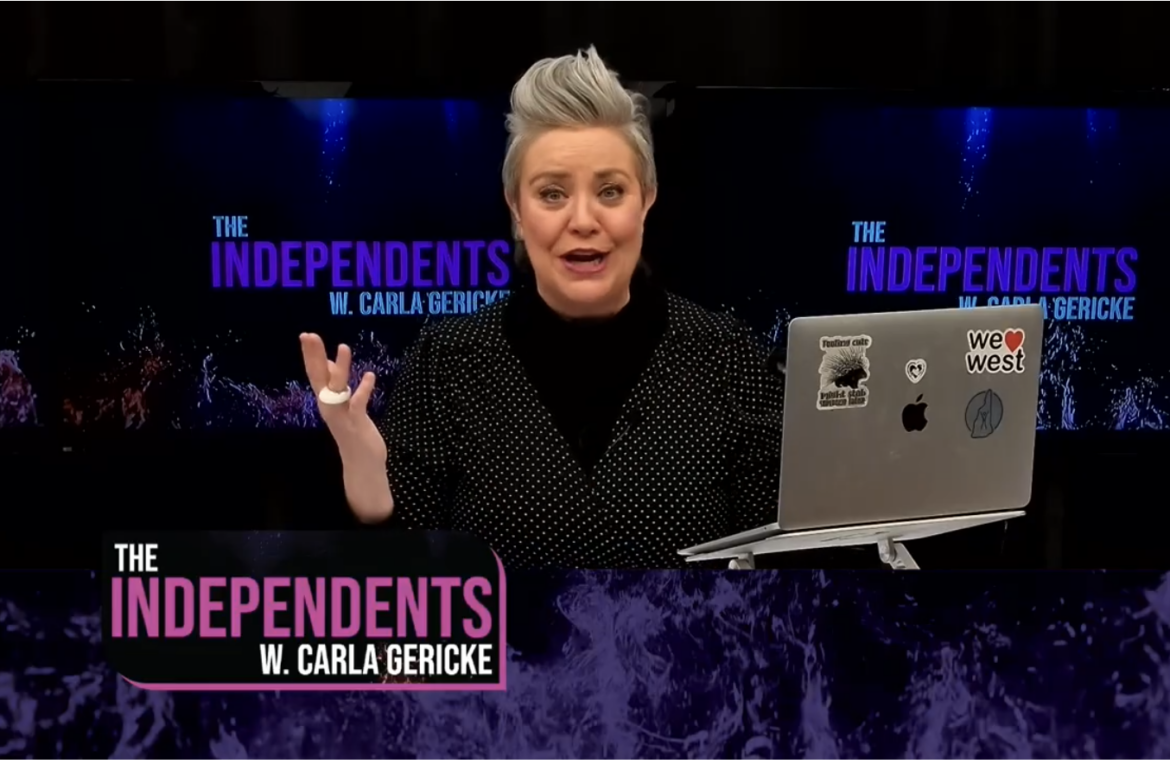
Carla Gericke has been a prominent figure in the Free State Project (FSP) since relocating to New Hampshire in 2008 as an early mover. She is deeply embedded in the organization’s leadership and advocacy efforts, blending her background as an attorney, author, and entrepreneur with a passion for libertarian principles.
Current Leadership Position
- Chairwoman of the Board: Gericke currently serves as the Chairwoman of the FSP’s Board of Directors. In this role, she helps build the vision for a freer future, represents the organization publicly, and collaborates with volunteers on strategic projects. The board operates under the FSP’s bylaws, guiding the nonprofit’s direction toward fostering individual liberty in New Hampshire.
Primary Spokesperson
- As the primary spokesperson for the FSP, Gericke is the public face of the movement. She frequently speaks at events, media appearances, and rallies to promote the FSP’s mission of creating a society with minimal government intervention and maximum personal freedom. This includes defending the project against critics and highlighting its successes, such as policy wins on privacy, taxes, and gun rights.
Past Roles and Contributions
- Former Executive Director: Gericke previously held the position of Executive Director, overseeing day-to-day operations, fundraising, and community outreach during a pivotal growth phase for the FSP.
- PorcFest Organizer: She has been a key organizer of the Porcupine Freedom Festival (PorcFest), the FSP’s flagship annual event—a blend of activism, education, music, and networking that draws thousands of liberty enthusiasts. Her involvement earned her the affectionate nickname “Queen Quill,” referencing the porcupine’s quill and her role in “quilling” (defending) the movement.
Gericke’s involvement extends beyond formal roles; she integrates FSP principles into her broader work, including co-founding Chainstone Labs (a crypto and finance incubator)[EDIT: THIS IS INCORRECT. I SPOKE AT SEVERAL FSB-DACS.] and hosting community events on New Hampshire’s Seacoast. Her personal story—from immigrating from South Africa, practicing law in Silicon Valley, to embracing Bitcoin in 2015—inspires many in the FSP community, emphasizing self-ownership and mindset shifts toward freedom.
For the most up-to-date details, check the official FSP Board page at fsp.org/board.
Why you can put a motor boat in Lake Massabesic (but no dogs), a road trip for nothing, but goddammit, it's the perfect day! https://t.co/FQv7prznoB
— Carla Gericke, Live Free And Thrive! (@CarlaGericke) October 17, 2025
My Living Xperiment: Day 289
I did everything per usual, had a guest on and did this one at the well-attended Volunteer Calling Party at the Quill, but it went sideways!!! Literally.
No idea why.
At the @FreeStateNH Volunteer calling party! Also, Quill first timers! https://t.co/S38bpqsJ2i
— Carla Gericke, Live Free And Thrive! (@CarlaGericke) October 16, 2025
Why Abstinence Is Treason (and Bitcoin Jesus Walks Free) (Manch Talk 10/15/25)
In a world addicted to yes, abstinence is treason. This week, Carla Gericke unpacks the radical freedom of self-control–and why The System hates it. Plus: Roger Ver walks free, highlights from the epic FSB-DAC conference at the Wentworth-by-the-Sea, and new Right-to-Know digitization moves out of the Corner Office.
This post also serves for Day 288 of My Living Xperiment.