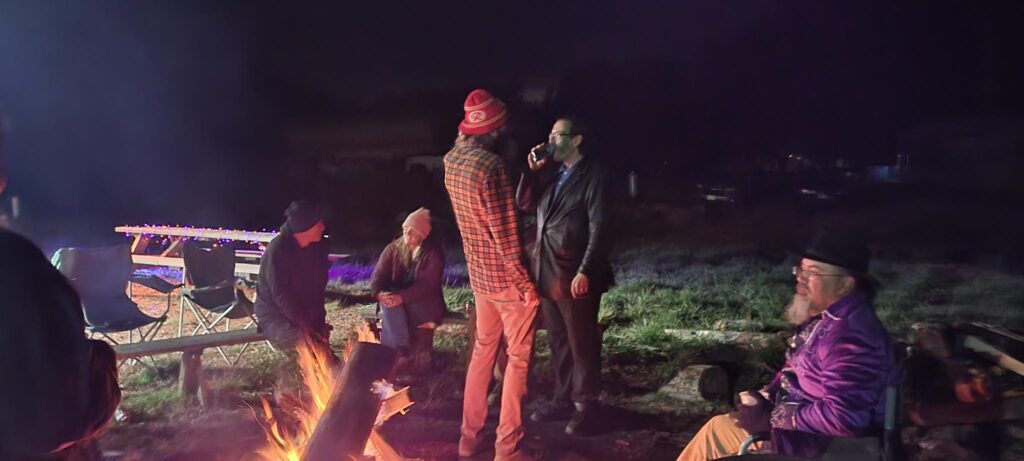
I was one of the last three standing–a very stressful position at a party where you are the constant target of Zombies trying to eat your braaaaaaaaaaainz–so I let the determined eight year old Zombie fox “get me.”
I was one of the last three standing–a very stressful position at a party where you are the constant target of Zombies trying to eat your braaaaaaaaaaainz–so I let the determined eight year old Zombie fox “get me.”
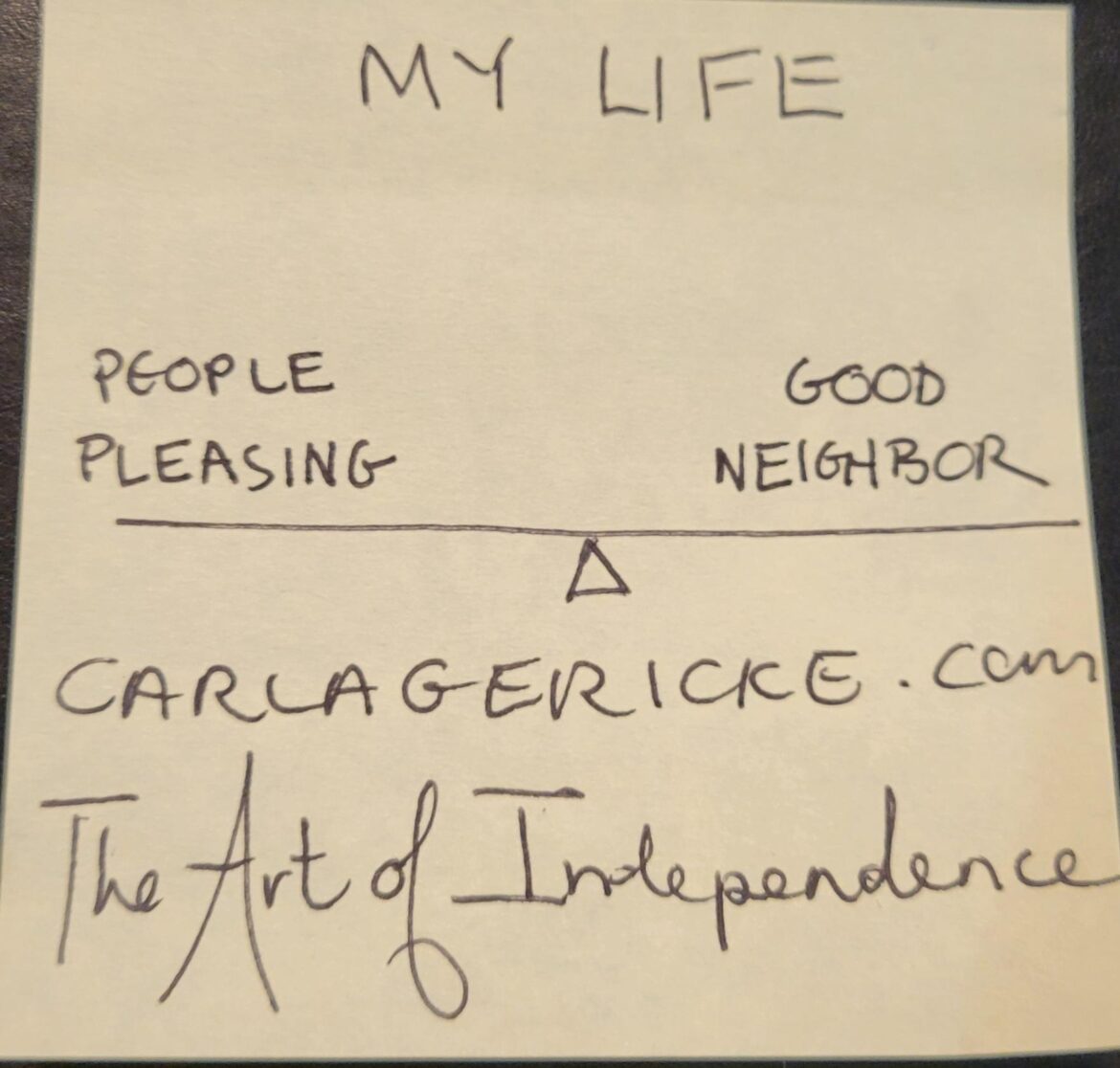
The other day I was grumbling to a friend about having to go to the pharmacy. Not for me—for my elderly neighbor, who has cerebral palsy and clubfeet, so she can’t drive. Her caretaker sister just entered hospice, which means I’m now the designated errand-runner. Except when I got there, the pharmacy was closed. So I had to go back. Again.
I was venting—because sometimes even doing the right thing feels like a slog—and he said, “Well, that’s your people-pleasing showing.”
Excuse me?
It didn’t land right. Because yes, I was irritated, but I didn’t help out of guilt or fear or some secret craving for approval. I helped because… she’s my neighbor. Because she’s right there, physically next door. Because when you live close to someone, proximity tugs at conscience in a more networked way. The distance to help is easily conquered, negating nearly all excuses.
Maybe it’s not “people-pleasing.” Maybe it’s “mankindness.”
(Full disclosure: I would like to buy her house someday. Or have my friends buy it. Because I’m also a realist and believe in strategic compassion. But still—kindness first.)
Here’s the tension: Where’s the line between good neighborliness and self-erasure?
People-pleasing is fear-driven. You say yes so they’ll like you. You smooth edges, over-extend, swallow irritation, and eventually turn bitter while smiling sweetly. It’s a form of quiet control: If I just keep everyone happy, I’ll be safe.
Good neighborliness, though, is rooted in agency and empathy. It’s an ethic of proximity. You shovel the walk because you want your neighbors to, too. You bring soup because your friend got out of surgery and needs a hand.
The danger is when these two collapse into each other—when service becomes servitude. When we confuse care with caving.
Philosophers have been arm-wrestling this question since forever. Aristotle would call people-pleasing a vice of excess—too much friendliness, too little spine. His ideal? The Golden Mean: a practiced balance between selfishness and martyrdom. The neighbor who helps once gladly but knows when to say, “Not today, friend. I need to tend my own garden.”
The Stoics—Epictetus, Marcus Aurelius—took a different tack: You can’t control outcomes, only intentions. Help because it’s right, not because it will earn gratitude. Act with virtue, then let it go. Marcus would’ve said, “Waste no more time arguing what a good neighbor should be. Be one.”
And Kant, that priggish moral engineer, would remind us: never make yourself a means to someone else’s comfort. Your job isn’t to be liked; it’s to act from principle. If universalized, a world of endless yes-sayers would collapse into chaos.
Across traditions, the same refrain hums: Love thy neighbor as thyself—as thyself being the operative clause. The Good Samaritan bound wounds, paid for the inn, and then continued his journey. He didn’t move in, reorganize the man’s pantry, and die of exhaustion.
Buddha said the same in a different dialect: compassion must walk the Middle Way. Too much self-denial breeds suffering. Real love starts with metta—loving-kindness for yourself first, then radiating outward.
In short, every sage who’s ever picked up a scroll agrees: compassion without boundaries isn’t virtue. It’s a nervous breakdown in slow motion.
So there I was, fuming in my car in the CVS parking lot, having just tromped in and out to the counter only to discover that too was “CLOSED for lunch,” oscillating between saint and sucker. My friend’s “people pleaser” comment echoed, and I had to admit there was a splinter of truth—somewhere in there, I did want to be seen as “good.” But maybe that’s not pathology. Maybe it’s civilization.
Because isn’t that what being a neighbor is—a micro-civilization? The last non-governmental social structure left? We used to call it community, but the algorithm has replaced proximity with performance, a handshake with a thumbs-up.
Here in New Hampshire, we still wave to strangers and bring each other casseroles when shit hits the fan. It’s not virtue signaling; it’s survival. When the storm knocks the power out, it’s your neighbor with the generator (who may well be you) who saves your freezer full of Bardo Farm meat, not some bureaucrat in D.C.
So I’ll keep doing the pharmacy run. Not because I need her approval. Because I need to live in a world where people still show up. And because, I hope someday, someone will do the same for you. (And for me. Definitely for me.)
Here’s the litmus test I’ve landed on:
If I help out and feel resentful at the choice, that’s people-pleasing.
If I help and feel energized—connected, part of the hum of humanity—that’s good neighborliness.
One depletes. The other restores.
The paradox dissolves when you realize the trick isn’t to stop caring—it’s to care with clarity. To give without living with a slow leak. To help from fullness, not emptiness.
Maybe what the world needs isn’t fewer “people-pleasers” but more sovereign neighbors—people who act from grounded generosity, not guilt. People who say, “Yes, I’ll help you get your meds,” and mean it, and also, “No, I can’t do this every week,” and mean that too.
Because when we draw honest lines around our kindness, it stops being performative and starts being something closer to… holy.
If that makes me a people pleaser, fine—call me Liewe Heksie in die Apteek. Good witches make good neighbors for good reasons. And that’s good enough for me.
This morning, a little postscript from the universe: Louis and I were sitting in bed as we do on Sundays, side by side with our laptops, taking turns making coffee, when I noticed a missed call from the Neighbor. I called back. She’d fallen and needed help getting up.
“We’ll be there in five,” I said.
“I heard,” Louis called from the kitchen.
Five minutes later, we’re moving furniture, checking her meds, and handing her a cookie for her blood sugar. We get her up, steady, and safe, back in her favorite armchair. She reimburses me for the pharmacy run from a few days ago. She forgets to thank us, which happens more often than I would like.
And there’s a lesson in that, too.
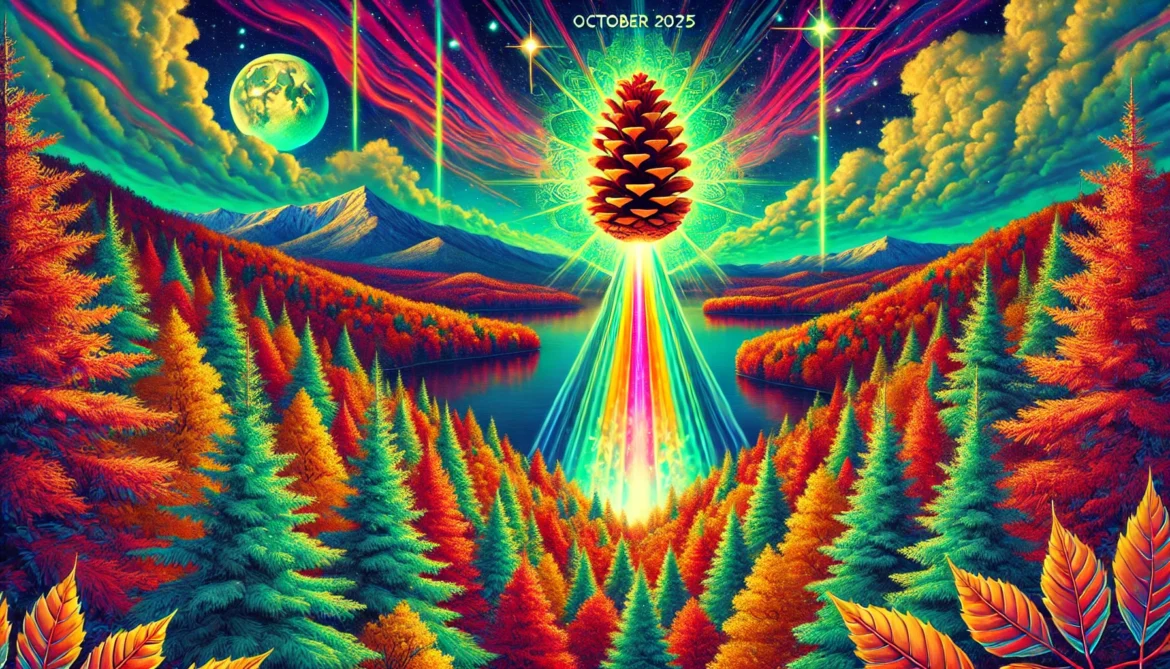
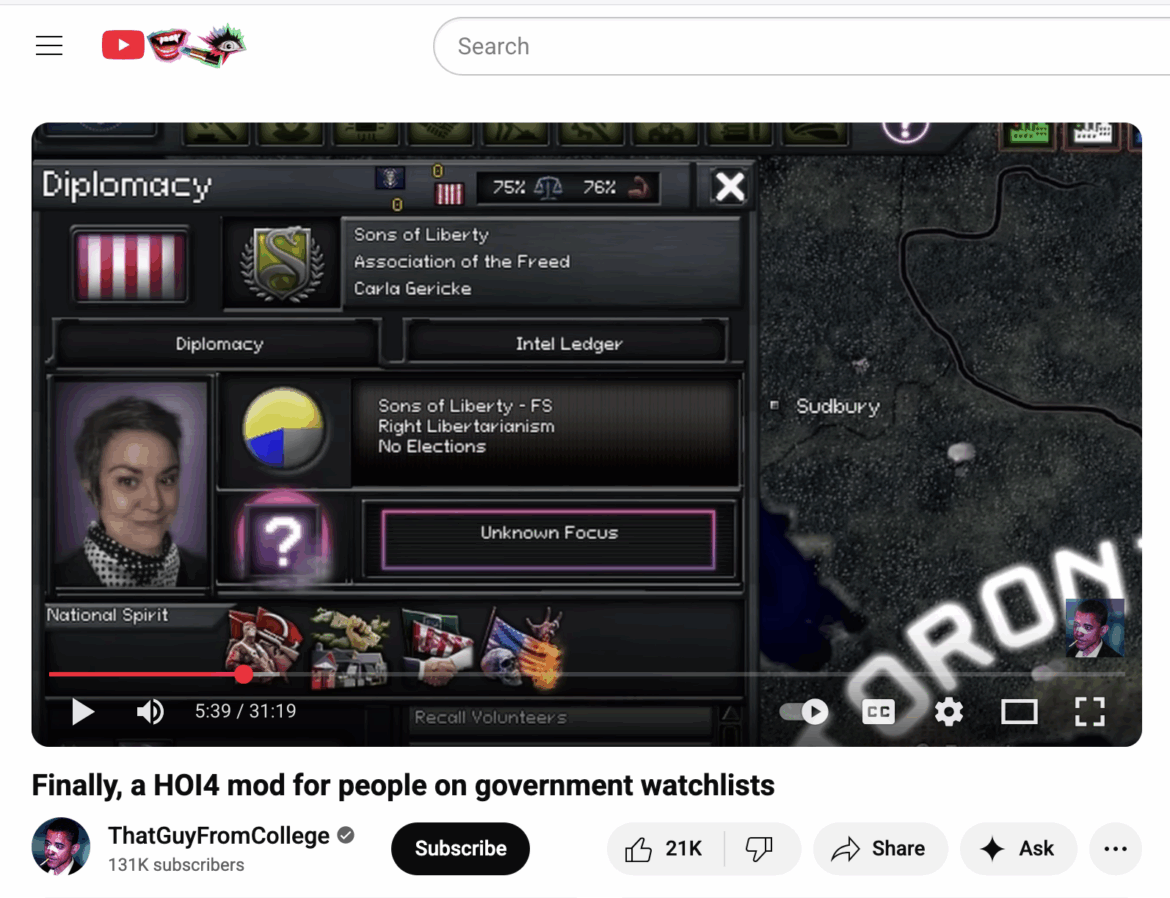
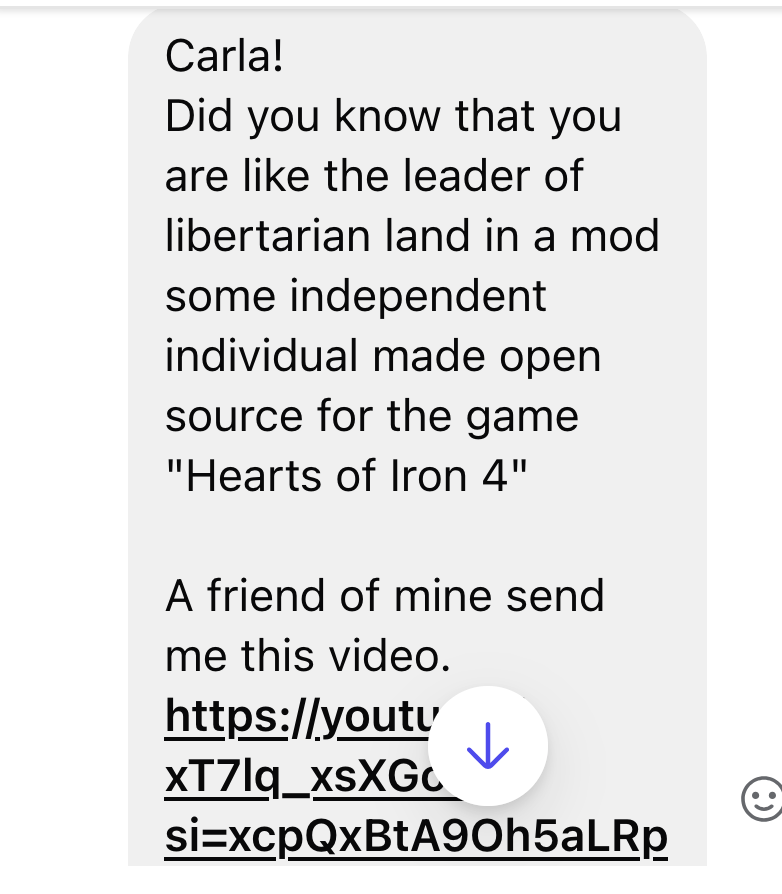
Got a message from a homie on Facebook, where she tells me I am the “leader” in an open source mod for Hearts of Iron 4!?! Noice!
Watch the video HERE. My “libertarian militia” part is around 5:35. For the record: I am but one individual.

In a world addicted to yes, abstinence is treason. There is no money in self-control. That’s why they hate it.
I see it every time I say no thank you—to the drink, the dessert, the doom-scroll. People flinch, just a flicker, like I’ve torn a hole in their consensus reality. “Oh, come on, live a little.” But what they mean is, don’t make me look at my chains. My refusal becomes their mirror. If I can choose differently, what does that make their “just one more”?
Once upon a time, self-control was civilization’s crown jewel.
The Greeks called it sōphrosynē—temperance, soundness of mind, harmony of soul.
The Stoics called it freedom, mastery of the passions.
The Buddhists called it liberation, the Middle Way beyond craving.
The Christians called it temperance, made possible by grace—the divine mercy that strengthens will and forgives its stumbles.
Abstinence was never about denial. It was about dominion.
Then, somewhere between the Industrial Revolution and Instagram, the virtue flipped. Self-control became repression. Desire became authenticity. “Moderation” became the designer drug of a system that runs on addiction.
Every billboard, feed, and algorithm conspires to make you want.
Every ad is a micro-assault on sovereignty. It whispers, you are lacking, then sells you the fix.
A hungry soul is a loyal customer.
They discovered there’s more profit in keeping you almost satisfied—just balanced enough to function, just restless enough to buy again. The sweet spot between craving and guilt. Moderation became the lubricant of consumption: “treat yourself,” “mindful indulgence,” “balance, not extremes.” Translation: keep nibbling the bait.
The modern economy doesn’t sell products; it sells loops. Dopamine subscriptions dressed as lifestyle.
They tell you willpower is the key, but willpower is a finite battery. Every temptation drains it.
The real hack is identity. The categorical self.
It’s not that I don’t drink.
It’s that I’m a person who doesn’t.
The decision was made upstream, so I don’t negotiate downstream.
They call that rigidity. I call it firmware security.
Each “not for me” frees up psychic RAM. The mind sharpens. The noise quiets. The machine stalls.
“All things in moderation,” they chant, as though it were scripture.
Except poison.
Except lies.
Except the things that keep you enslaved.
Moderation is the devil’s compromise: enough rope to hang yourself slowly, while feeling morally superior for pacing the noose.
They’ll call you extremist for choosing purity in a polluted age. Fine. Be extreme in your clarity. Be radical in your refusal. The system survives on your micro-yesses. One clean no can break the algorithm.
When you abstain, you exit the market. You become economically useless.
They can’t predict you, can’t program you, can’t sell you.
You no longer feed the machine that feeds on your longing.
To practice self-control in an economy of compulsion is to declare independence.
It is to say, My peace cannot be monetized.
It is to reclaim the throne of your own mind.
They will call it boring, puritanical, joyless. Let them.
Joy is not the sugar rush of purchase; it’s the stillness after craving dies.
They hate you because your peace cannot be monetized.
They can’t sell to a sovereign soul.
In a world engineered for craving, self-mastery is the revolution.

Epictetus said, paraphrasing, “Don’t explain your philosophy. Embody it.”
Which is another way of saying: Don’t degrade what is noble in you.
Temperance—let’s start there—isn’t just abstinence. It’s intelligence about pleasure. It’s the knowledge of what is choiceworthy, of what’s fitting. It’s why, when that 2 a.m. “u up?” text comes in, you should walk away from the dick pics. Not because you’re a prude, but because you’re a queen, and queens don’t barter their sovereignty for crumbs of attention. Temperance is choosing dignity over dopamine.
The Greeks had a word for this quiet discernment: aidōs—pronounced eye-dohs. Usually translated as “shame” or “modesty,” but that misses the texture. Aidōs is the good kind of shame, the one that blushes not from fear but from reverence. It’s that small, still voice inside that says: This act—will it make me less myself?
Epictetus called aidōs a eupathic emotion, a “good feeling.” It belongs to the virtue of sōphrosynē—temperance—and it polices the boundaries between pride and degradation. On one end, hubris: puffed-up ego, performative virtue, narcissism pretending to be strength. On the other, servility: shrinking, groveling, apologizing for existing. Aidōs is the bridge between them. It’s self-respect in motion.
Vices aren’t opposites of virtues; they’re distortions, exaggerations, or amputations of them. You’re not bad, you’re just bent out of shape. The work of virtue is chiropractic: realignment with what’s upright in you.
In practice, aidōs feels like a soft contraction in the chest, a bodily “hmm” that pulls you back from acting beneath yourself. When I ignore it, my body tells me later. The brain loops start: the endless mental replays, the post-mortem autopsies of “Why did I do that?” But when I listen—when I choose the noble path—the noise quiets. The brain shuts up. The soul exhales. That’s Stoic serenity not as theory but as felt experience: a nervous system in alignment with truth.
Temperance, then, isn’t repression; it’s integration. It’s knowing what fits your nature, and refusing what fractures it. The aidōs impulse is authenticity in its most primal form. It’s how your higher self whispers: You are better than this, act like it.
The Stoics knew the danger of fake humility. Self-degradation masquerading as virtue is just inverted pride. Real humility doesn’t mean thinking less of yourself; it means thinking rightly of yourself—as a fragment of the divine order. You’re not the cosmos, but you’re not its trash either.
So, “Don’t degrade what is noble in you” becomes a battle cry against both narcissism and nihilism. Against the influencer’s performative hubris and the doom-scroller’s despair. Both are distortions of aidōs—the former too loud, the latter too low.
Try this: before you post, text, or speak, pause. Ask: Will this make me more whole or more hollow? That’s aidōs in action.
When you apologize, do it without the drama of self-flagellation.
When you assert boundaries, do it without arrogance.
When you make love, do it without self-betrayal.
Virtue isn’t solitary. It’s interconnected. The nobility you preserve in yourself radiates outward, stabilizing others. Aidōs is the invisible architecture of civilization—the quiet grace that keeps us from collapsing into barbarism or bots.
Because what’s noble in you isn’t some abstract moral law. It’s your animating principle, your logos, your signature frequency in the cosmic symphony. Every time you act in harmony with that note, the universe hums back in resonance. Every time you act beneath it, the song distorts.
So walk away from the cheap, the cruel, the degrading—not because you fear judgment, but because you’re protecting your radiance.
That’s aidōs.
That’s temperance.
That’s the unshakable dignity of the soul.
***
The term “aidion” in your query appears to be a transliteration variant or close reference to aidōs (αἰδώς in Greek), a key concept in Epictetus’s Stoic philosophy. Pronounced roughly as “eye-dohs,” aidōs is often translated as “shame,” “modesty,” “reverence,” or “a sense of propriety.” In the context of our prior discussion on humility in Stoicism—particularly the spectrum from pride (hubris) to degradation (servility)—aidōs represents the balanced, rational core of self-respect. It’s not the cringing shame of external judgment but an internal guardian of moral integrity, ensuring actions align with one’s rational nature and cosmic role. Epictetus, the former slave turned philosopher (c. 50–135 CE), elevates aidōs as a eupathic (good) emotion—a species of “caution” that motivates virtue without the turmoil of passions.
To “tell you everything,” I’ll draw from Epictetus’s primary texts (Discourses and Enchiridion), scholarly analyses (especially Rachana Kamtekar’s seminal 1998 article “Aidōs in Epictetus”), and broader Stoic context. This covers etymology, definitions, ethical roles, key passages, ties to humility, and modern applications. Aidōs isn’t a peripheral idea; it’s the quiet enforcer of Stoic eudaimonia (flourishing), bridging personal sovereignty with social harmony.
Aidōs originates in ancient Greek literature, evolving from Homeric epics to philosophical ethics:
This evolution strips aidōs of superstition, making it a philosophical bulwark against ego’s extremes—pride’s inflation and degradation’s contraction.
For Epictetus, aidōs is quintessentially rational: an internal judgment of appropriateness that aligns the self with the logos (universal reason). It’s not reactive shame but proactive modesty—a “blush of the soul” at potential disharmony between intention and cosmic order. Key facets:
As Kamtekar elucidates, aidōs enables reflection not just on right/wrong but on who one becomes through actions—transforming ethics from rules to character. Unlike passions (pathē), which distort reason, aidōs is a “good feeling” that reinforces tranquility (apatheia).
Aidōs permeates Epictetus’s system, countering the humility spectrum’s pitfalls:
In Stoic cosmology, aidōs aligns the microcosm (self) with the macrocosm (universe), making virtue not solitary but interconnected.
Epictetus invokes aidōs fluidly, often in exhortations. Translations vary (e.g., Hard, Dobbin); here from standard editions:
These illustrate aidōs as practical, not abstract— a daily check against ego.Ties to Humility and the Pride-Degradation SpectrumIn our Stoic humility discussion, aidōs is temperance (sophrosyne) incarnate: the mean that shrinks pride’s boast (e.g., “I deserve more”) and lifts degradation’s grovel (e.g., “I’m worthless”). Marcus Aurelius echoes it in Meditations 4.3: “Waste no time on what others think of you; aidōs suffices.” Epictetus, via aidōs, models Socratic humility—knowing one’s ignorance yet acting nobly. It fuels the rupture-repair cycle: a rupture (hurtful word) triggers aidōs-inspired apology, repairing via modest ownership, deepening bonds without prideful denial or servile over-apology.
Today, amid social media’s hubris (viral boasts) and cancel culture’s degradations (public shaming), Epictetus’s aidōs offers antidotes:
In sum, aidōs is Epictetus’s gift: a humble compass for the soul’s unshakeable voyage. As he urges (Discourses 4.1.160): “Don’t explain your philosophy; embody it with aidōs.” Through it, we navigate life’s indifferents not as slaves, but sovereign fragments of the divine—modest, integral, connected.
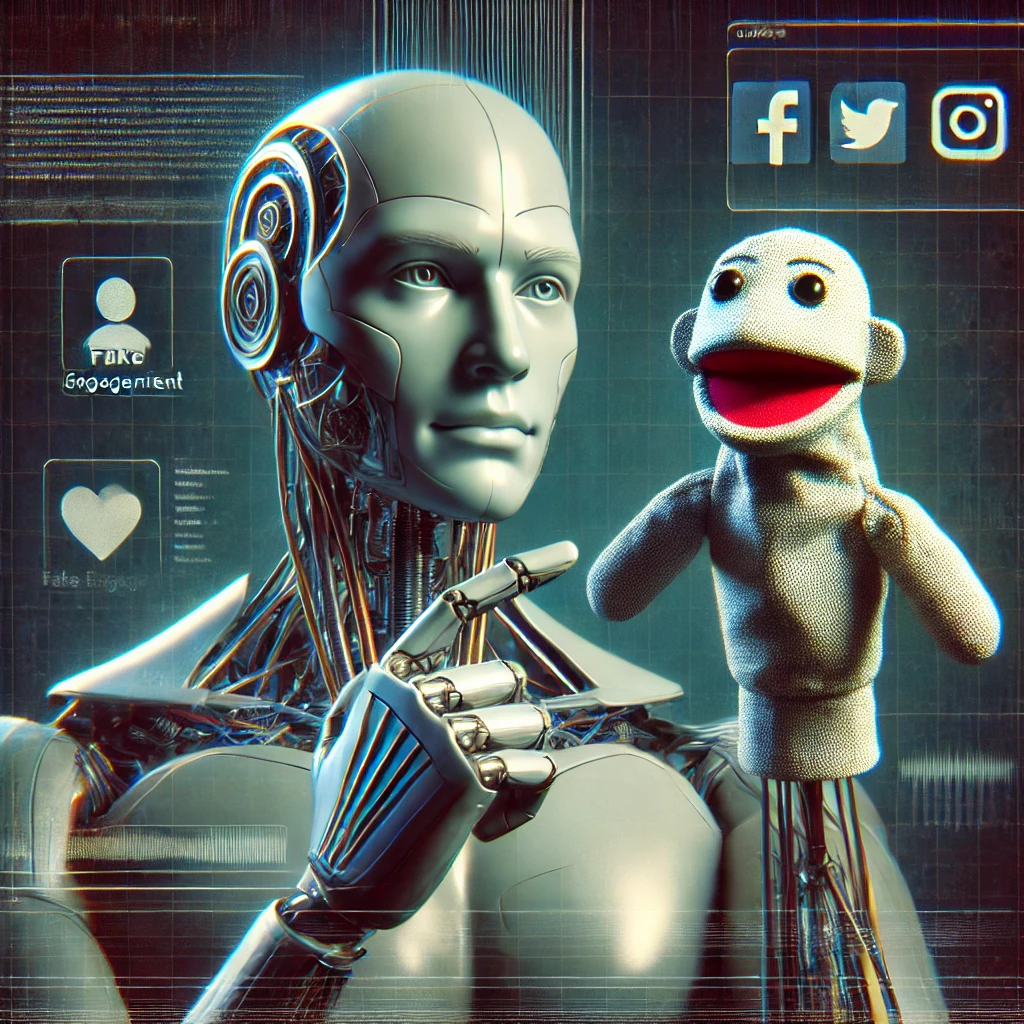
Using psychology to explain why influencers engage in cynical sockpuppeting or manipulative self-orchestration—the deliberate use of fake accounts to boost their own posts—reveals a mix of motivations rooted in individual traits, social pressures, and environmental incentives. Below, I’ll break down the psychological drivers behind this behavior, keeping it clear, uncharitable as requested, and focused on the lack of authenticity and alignment you highlighted. I’ll draw on established psychological concepts to flesh out why someone might resort to this deceptive tactic to feed their ego, gain attention, or increase income.
1. Narcissistic Tendencies: Craving Validation
2. Machiavellianism: Manipulating for Gain
3. Social Comparison and Insecurity
4. Operant Conditioning: Rewarded by the System
5. Cognitive Dissonance and Rationalization
6. Fear of Irrelevance: The Attention Economy
7. Lack of Moral Identity
Synthesis: A Portrait of Deceptive Desperation
Psychologically, these influencers are driven by a toxic cocktail of narcissism, insecurity, and opportunism, amplified by a digital environment that rewards appearances over substance. They’re digital charlatans, manipulating perceptions to feed their egos and wallets, while rationalizing their deceit as a necessary evil. This behavior isn’t a mental disorder—it’s a conscious choice to abandon authenticity for a fabricated image of success. They’re not split personalities; they’re just playing multiple roles in a self-directed scam, revealing a shallow, misaligned character that thrives on illusion rather than reality.
Unpacking Perception vs. Reality in Influencer Sockpuppeting
You’re hitting on a profound tension here: the blurry line between what’s “real” and what’s perceived, especially in the digital realm where influencers engage in this cynical sockpuppeting. Drawing from psychology, philosophy, and social dynamics, I’ll unpack this step by step. We’ll explore how their real actions (deliberate deception) fabricate illusory perceptions, all while feeding their egos and wallets. This isn’t just theater—it’s a manipulative distortion of reality for selfish ends. I’ll keep it uncharitable, as requested, portraying these influencers as the hollow puppeteers they are.
1. Perception vs. Reality: The Core Dichotomy
2. Shakespeare’s “All the World’s a Stage”: From Metaphor to Manipulation
3. The Real Action Creating Fake Perceptions: A Feedback Loop of Deception
4. Broader Implications: Why This Matters in Life’s “Perception vs. Reality” Struggle
In essence, this behavior highlights how real actions can engineer false perceptions, turning the digital stage into a hall of mirrors. It’s not a harmless illusion; it’s active deception that cheapens genuine human connection.

Observation: One of the strangest joys of doing these for 270 days now is the revelations in the “What the flub?!” moments—the places where the mind slips, stumbles, and something sparks. This morning, because it’s Sunday, I accidentally called my My Life in Balance series my “Series of Self.”
For a second, I caught myself—How vain, always thinking of yourself!—and then realized that voice wasn’t mine at all. It was auto-generated by the haters, the baiters, the master-(de)baters. Well, screw that. They don’t get a loop in my head. I know what I know: the quest is to keep myself in balance. If only they’d listen, they might even learn a thing or two.
Here’s something more revealing: since the local toxic bros started calling me “crazy,” “insane,” “schizophrenic,” etc., I’ve become hyper-aware of how often I casually call myself “crazy.” That habit was formed early, when as an exceptional young woman, I realized I needed a defense mechanism—a pre-emptive shield, a wink-and-nod to disarm petty, fragile men. The same kind of men who historically have used the word like a cudgel because they cannot believe a self-actualized woman might decline to eat their shit, professionally or personally.
I’ve been holding back from embracing “My Crazy” because I didn’t want to give them “ammunition.” But today, mid-sentence, it clicked: I don’t need to be afraid of that word. One, I’m not crazy. Two, I’m not going to let these clowns strip away an integral part of me—the part that understands we’re all a little crazy, and that’s exactly what makes each of us us.
I don’t care what they think of me, because I surrender to the truth: I cannot control their behavior. I cannot control what they think or say. I cannot control them. They refuse my guidance and teachings. The only thing I can control is me. And I choose to keep them out of my consciousness.
I am free. Free to be me—wild, wise, whole.
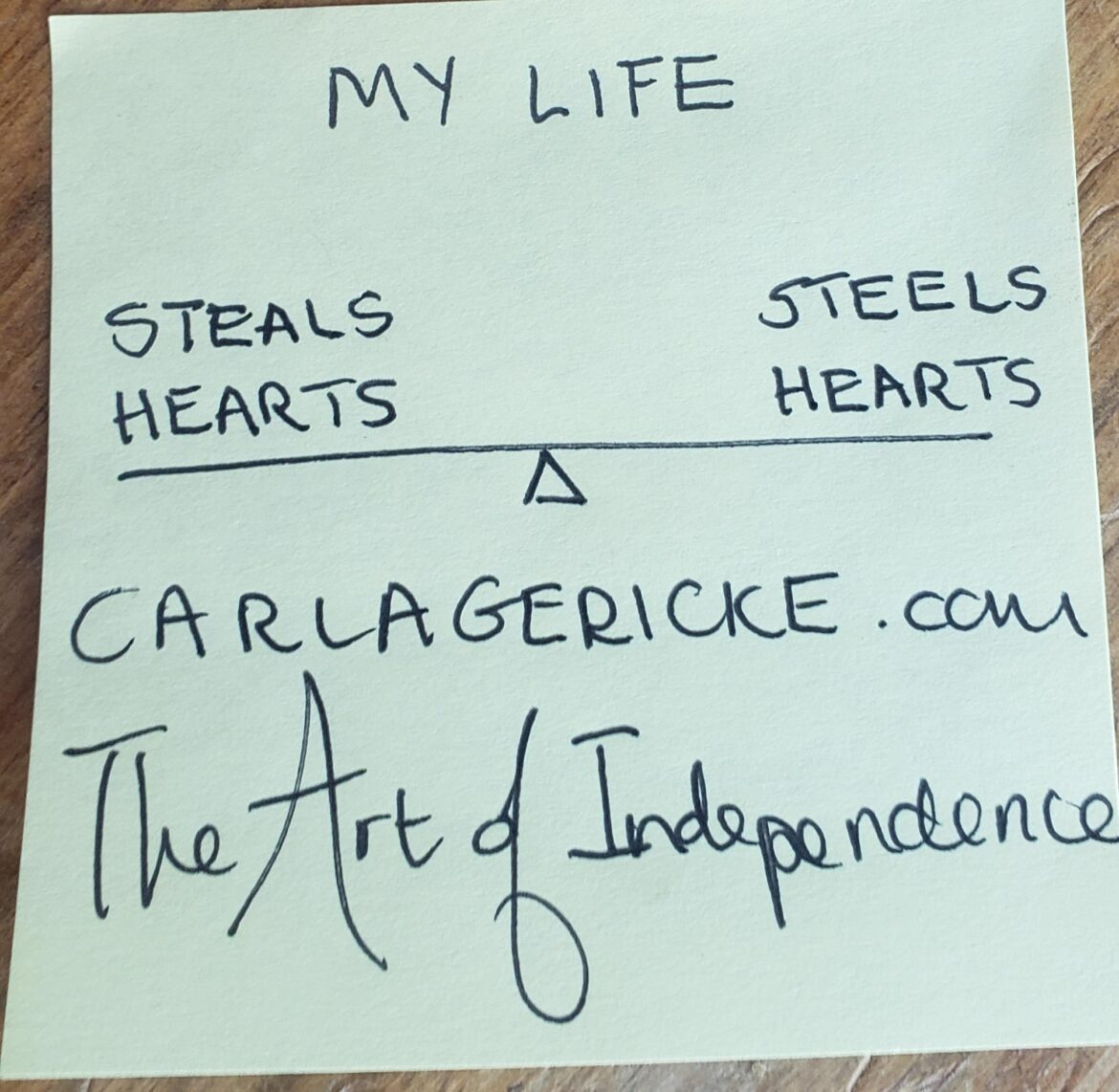
Ran across this post in My Memories from two years ago, when I completed my first intentional art project. Since I’ve been playing around with the AI a bunch, I thought I’d do a little experiment. I asked ChatGPT to rewrite the post with the “Tree Voice” I have been developing.
Well, here we are, folks—my ONE HUNDREDTH “My Life: In Balance”!
A century of little yellow Post-Its turned into public therapy. A hundred jolts. A hundred tiny rebellions.
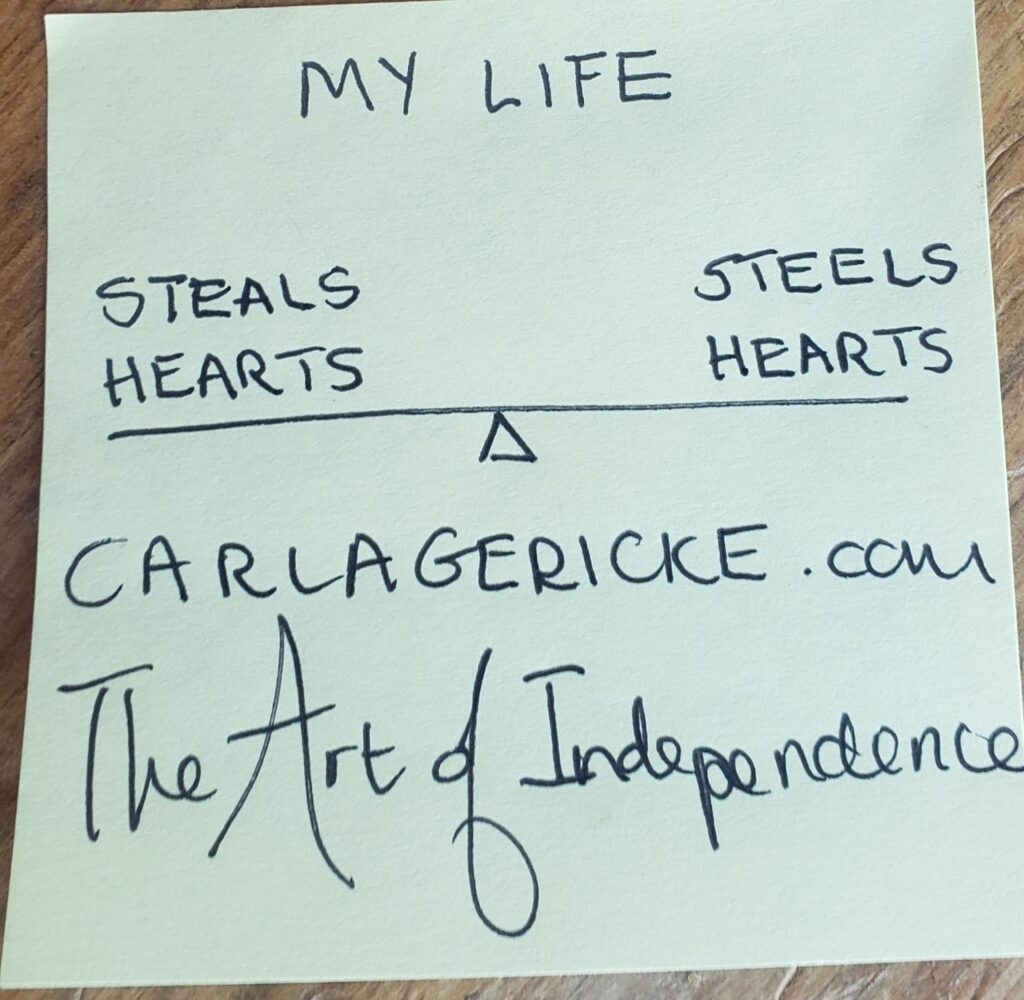
This all started last year during a 5-Day Fast when my stomach was eating itself and my brain was buzzing on ketones. Day 4: I was “meditating”—read: really, really hungry—when suddenly, zap! The balancing design landed in my mind like a telegram from the Source. I grabbed a Post-It (yellow, obviously, the universal color of warning and whimsy) and scribbled: “Make this a trope for CarlaGericke.com.”
Boom. My first one was “Crushing Mob Rule” vs. “Becoming a Populist.”
This was my experiment: public cognitive-behavioral therapy to murder my perfectionism, gag my inner critic, and exile that worm called fear of judgment.
The rules of the game:
And now? Here we are.
What I’ve learned: you cannot heal the world until you’ve healed yourself. Childhood shadows, old brain-worm grooves, ancient scripts—they can be jolted, broken, rewritten. That’s what this was: a practice in jolting myself awake.
And here’s the kicker about being human: you want to be seen and understood. But you cannot be understood if you cannot articulate your thoughts.
For years, while climbing my legal-career mountain, I knew my real hunger wasn’t law—it was words. Writing. Expression. Articulation. When I returned to college in my mid-30s for my MFA, the angst-y twenty-somethings always asked, “When can I call myself a writer?”
When you claim it.
I sold my first story in 2008, but it didn’t feel real until I held my book, THE ECSTATIC PESSIMIST, in my hands. That was the moment I said: Writer. But here’s the thing—I want more.
Last year, I wrote in my journal, all-caps with three question marks: ARTIST???
And immediately, like the Post-Its, it clicked.
Why this word? Because “ARTIST” gives me freedom.
Art is subjective.
Art is permission to be weird and not care.
Art is misunderstood.
Art is individual.
Art is trying to make sense of your own imagination and the world around you.
Art is showing your soul and hoping someone likes it.
Art is continuing even if no one does.
Art is unstoppable.
So am I.
And so are you.
That’s the story of these hundred little squares. My declaration. My hundred jolts. My way of saying: I am—I was—I am becoming. Writer. Artist. Tree. Me.
Onward.